


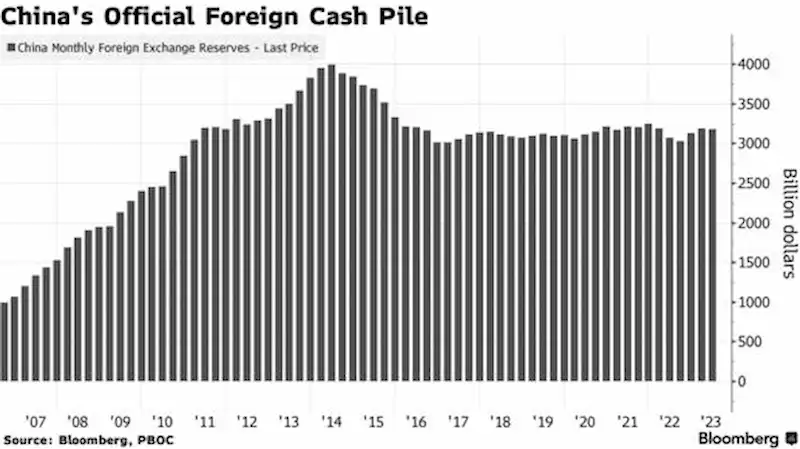


China, one of the largest economies in the world, is said to be sitting on a massive pile of money worth $6 trillion. However, according to analyst Brad Setser, about half of this amount remains "hidden" and does not show up in the official books of the People's Bank of China.
These so-called "shadow reserves" are believed to be present among the assets of state commercial lenders and policy banks, rather than being included in the official foreign-exchange reserves. Setser suggests that while the official reserves have remained relatively stagnant over the years, the "hidden" reserves have likely grown alongside China's export surplus.
This lack of transparency in China's reserve reporting has raised concerns about the overall stability of the global economy. Setser argues that China's pivotal role in the global economy means that any actions, whether seen or unseen, by the country will have a significant impact on the rest of the world.
One example of the influence exerted by China's reserves is its funding of the Belt and Road Initiative. Setser suggests that this extensive infrastructure plan originated from a decision made in 2009 to diversify China's foreign exchange holdings. The scale of China's reserves is significant, with Setser estimating that institutions reporting to the central government likely hold around $6 trillion in foreign assets, compared to the reported $3.1 trillion in official reserves.
It is important to recognize the weight of China's massive accumulation of foreign exchange, which makes the country a substantial global creditor. Despite concerns surrounding China's domestic debt, its global impact is still substantial. The large pool of hidden reserves underscores this fact and serves as a reminder of China's influential position in the global financial landscape.