


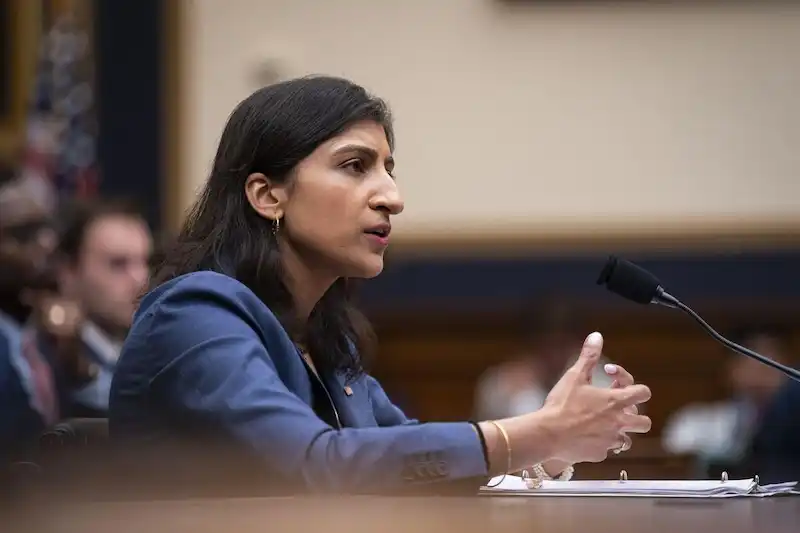


Federal Trade Commission Chair Lina Khan delivered a staunch defense of the agency's track record in court, addressing the criticism it faced following its unsuccessful challenge to Microsoft's acquisition of Activision Blizzard. Speaking at the Economic Club of New York, Khan acknowledged that the FTC had lost two merger cases in federal court out of the 13 to 20 it had brought. However, she emphasized that losing two cases is considered acceptable within the broader context of the agency's merger enforcement program.
In her prepared remarks, Khan refrained from directly mentioning the recent losses and instead focused on the deals that were abandoned after the FTC filed a lawsuit. One such example was Lockheed Martin's failed attempt to acquire rocket maker Aerojet Rocketdyne Holdings. Khan did, however, acknowledge that the Microsoft-Activision deal presented a unique challenge for the agency due to the non-competitive nature of the two companies. As they operate in different verticals, litigating against a vertical merger like this can be more difficult.
The FTC's legal challenge to the Microsoft-Activision merger was dismissed by a federal judge on July 11, with the agency currently appealing the ruling. Despite the setback, the deal has not yet been finalized due to objections from UK competition regulators.
During her speech, Khan also highlighted the newly unveiled merger rules by the FTC and the Justice Department. While some have criticized these guidelines for heavily relying on decades-old cases from the 1960s and 1970s, Khan defended their validity, stating that these decisions are still considered good law until overturned by a Supreme Court decision.
In conclusion, Khan's remarks aimed to address the FTC's recent challenges and setbacks, reassuring the audience that the agency's overall merger enforcement program remains robust. While acknowledging the difficulty of litigating vertical mergers, Khan emphasized the importance of upholding the existing antitrust laws and rules while adapting them to the evolving business landscape.