


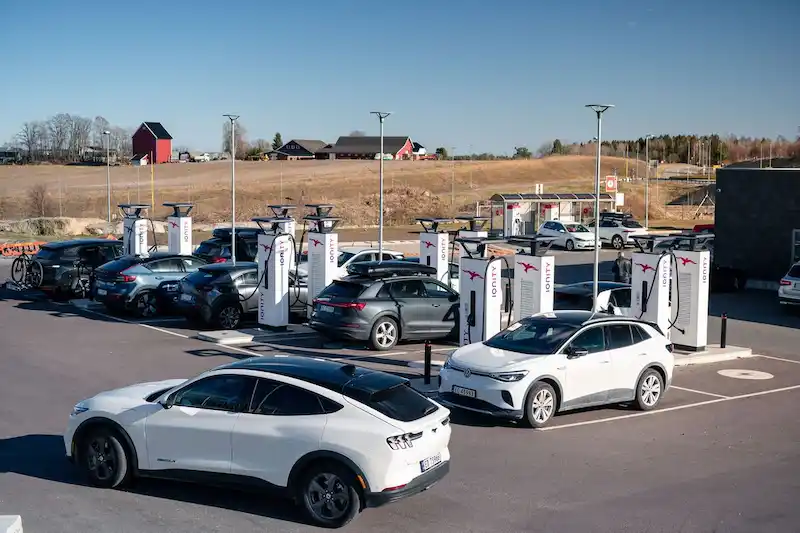


Norway, known for its generous tax incentives and subsidies for electric vehicles (EVs), has become the global leader in the adoption of battery-powered autos. But now the country is facing a new challenge: how to gradually phase out these incentives and subsidies that have spurred the success of the EV market. This dilemma serves as a lesson for other countries, such as the US, which are looking to accelerate their own transition to EVs.
In recent months, over 96% of new passenger car purchases in Norway have been EVs or hybrids, with the Tesla Model Y becoming the country's best-selling vehicle of all time. While these achievements in reducing fossil fuel consumption are commendable, the cost to the treasury has been significant. In 2022 alone, EV incentives cost Norway $4 billion in tax revenue, which is as much as 2% of the total. This decrease in funds has had implications for the maintenance of infrastructure such as roads, which is crucial in a country with challenging terrains and limited public transportation options.
Oslo policymakers are now grappling with the task of restructuring taxation to support infrastructure spending while simultaneously navigating a maturing EV market that other advanced nations are not likely to reach for several more years. A cautionary example comes from Sweden, which swiftly ended EV subsidies last year, resulting in a 20% drop in private car registrations. The lesson here is that it is crucial to sustain momentum and gradual transition rather than abruptly discontinuing incentives.
The issue of ending EV subsidies has sparked controversy in Norway. Those who still own combustion engine cars, which make up 72% of the current passenger fleet, oppose the move, while advocates argue that it is necessary to meet the country's net-zero emissions targets. Furthermore, the financial burden falls disproportionately on lower-income individuals who have not yet been able to afford EVs. There is also a divide between urban and rural dwellers, with those in remote areas heavily reliant on driving. To address these concerns and maintain EV adoption, the government is exploring ways to ease the burden on lower-income individuals.
Previously, EVs in Norway were exempt from auto-purchase taxes, which can amount to over $27,000 per car, plus a value-added tax of 25%. In January, a smaller surcharge was introduced for EVs to partially rectify this imbalance. However, other incentives, such as free city parking for EVs and exemptions from road taxes, have been phased out. Company-car-tax breaks for EVs have also been reduced in recent years. These changes have raised concerns that they may hinder further EV sales in the country when the market is on the verge of significant growth.
To address these challenges, Norway is considering implementing additional measures. These include higher value-added tax rates on luxury EVs and a potential tariff system based on an EV's usage, akin to the current gasoline tax. There are also discussions around phasing out certain exemptions, such as allowing EVs to use bus lanes during peak hours. These measures reflect a growing realization that while EVs are a step in the right direction, they do not solve all of the transportation challenges, including traffic congestion and the environmental impact of vehicle weight.
Furthermore, as more Norwegians switch to EVs, there are concerns that the country's grid infrastructure may not be able to cope with increased demand. Norway's hydropower company, Eviny, warns that the pace of building new grids to meet industry and consumer requirements is bottlenecking. This underscores the need for a holistic approach to sustainability, including advancements in public transportation and prioritizing alternative modes of travel such as cycling.
The transition away from EV incentives in Norway is a complex issue, highlighting the trade-offs involved in balancing environmental goals, economic concerns, and social equity. It is crucial for policymakers to carefully navigate this path and ensure that the phased withdrawal of incentives does not impede progress towards a greener transportation system that benefits all segments of society.