


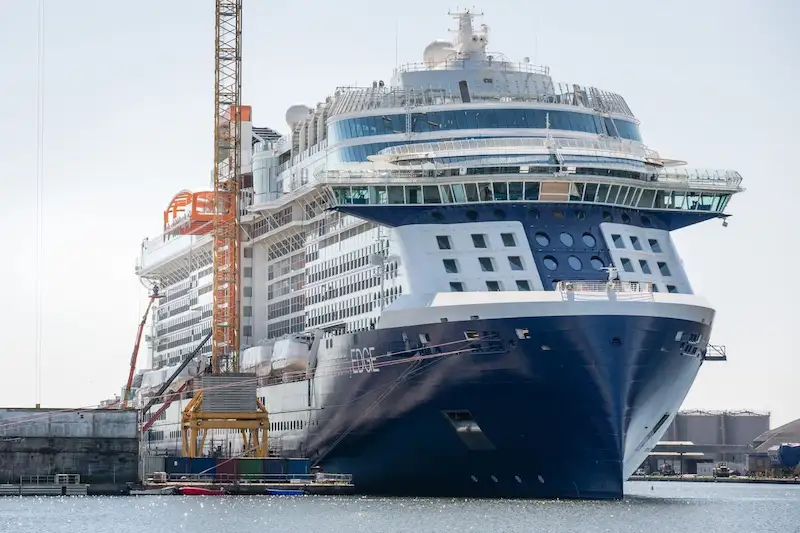


In an unlikely turn of events, the French economy received an unexpected boost in the second quarter, largely attributed to the cruise ship industry. Despite a backdrop of falling consumer spending and sluggish investment, France's GDP grew by 0.5%, surpassing the initial 0.1% prediction. This surprising growth can be primarily attributed to the increased exports facilitated by the delivery of a cruise ship during this period.
The tourism industry, which was effectively shut down during the Covid-19 lockdowns, has been witnessing a remarkable rebound. International travel has more than doubled compared to the previous year, surpassing pre-pandemic levels. Interestingly, Europe seems to be outpacing the United States in this regard, presenting a rare instance where Europe is ahead.
As the most visited country in the world, France has benefited significantly from the revival of tourism. Aeroports de Paris SA, the operator of Paris airports, has reported that over 47 million passengers have passed through their facilities since the beginning of 2023. Furthermore, the traffic is expected to reach around 93% of the 2019 levels by the end of the year. Corporate earnings of various companies corroborate this trend, with EssilorLuxottica SA's Sunglass Hut reporting six consecutive quarters of double-digit sales growth in Europe.
Luxury giants LVMH, Kering, and Hermes have also experienced positive outcomes due to the resurgence of travel. However, the absence of Chinese tourists, who were instrumental in their success prior to the pandemic, remains a concern. Meanwhile, Accor, a prominent hotel chain, has increased its 2023 guidance. With almost half of its European revenue coming from France, Accor has capitalized on the influx of international leisure and business guests in Paris. The sustainability of this growth, however, raises questions, particularly considering the potential dampening effect of cooling inflation on consumer spending.
Nevertheless, the issue of over-tourism has resurfaced as economic inequality and climate concerns fuel discontent and lead to more stringent regulations. Cruise ships, in particular, have become targets of criticism, despite recent efforts to make them more environmentally conscious. For instance, Amsterdam has banned cruise ships, and Italy has introduced new size restrictions. France, where a significant portion of tourism is concentrated within a limited area, is experimenting with regulations aimed at spreading out travelers.
Changing demand patterns could also pose a threat to Europe's $2 trillion travel industry. Record-breaking heatwaves in southern Europe and images of tourists being evacuated amidst wildfires have prompted a shift toward cooler regions. The Mastercard Economics Institute has observed a preference for destinations such as the fjords over the fields of Provence. This shift may have long-term implications for the travel industry in Europe.
Tourism has long been intertwined with the notion of soft power, particularly in Europe. Therefore, it is crucial to keep an eye on the Middle East, where tourism has fully recovered to pre-pandemic levels. Saudi Arabia, in particular, has been making significant strides in leveraging tourism for its benefit, such as bidding to host the 2030 Expo and recruiting high-profile figures like former French minister to promote its al-Ula region. France may inadvertently be exporting more than just its expertise in cruise ship building.
In other news, BNP Paribas SA, a major bank, has relied on cost controls and lower provisions for bad loans to counterbalance the decline in fixed income trading during the second quarter. In separate but related news, BNP is expected to join others in paying a fine to US authorities over the use of unapproved electronic messaging platforms. Additionally, carmakers like Renault SA are seeing improved profits thanks to sustained demand and higher prices. Meanwhile, Stellantis NV, another automotive company, is seeking better deals from suppliers to protect its margins.
French consumers are growing increasingly confident that inflation will ease in the coming year, according to data from national statistics agency Insee. The balance of households expecting prices to accelerate has dropped to its lowest level since 2009, alleviating concerns regarding rising prices.
A probe is underway in France regarding the alleged sharing of key semiconductor technologies with foreign powers, including China and Russia. Prosecutors are investigating French and Chinese citizens involved in these actions.
Furthermore, France is seeking to collaborate with China in establishing common standards for cosmetics. The European Union has expressed concerns about Beijing's requests for increased product information disclosure, as there are fears that it could lead to the surrendering of trade secrets under the guise of product safety.
For wine enthusiasts who appreciate Burgundy but don't have limitless budgets, finding affordable options within the region can be challenging. While prices of the most coveted pinot noirs and chardonnays from Burgundy have reached four-digit figures, there are still excellent wines available for less than $70.