


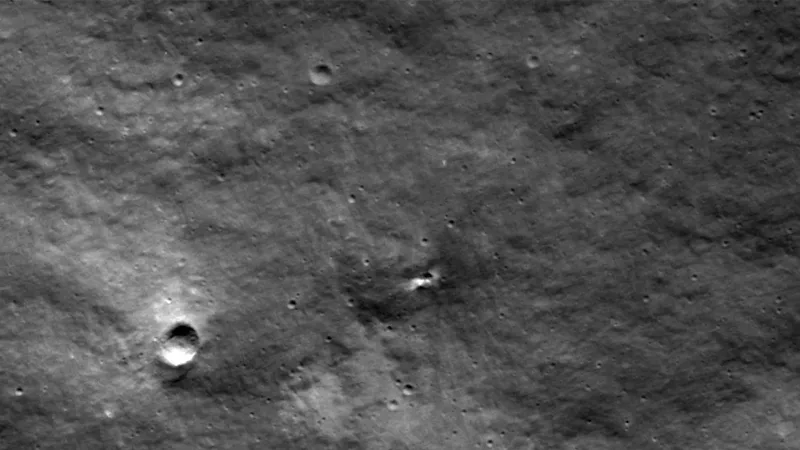


A fresh crater has emerged on the moon, likely caused by the crash of Russia's uncrewed Luna 25 mission. NASA's Lunar Reconnaissance Orbiter (LRO) captured images of the crater, which was created when Luna 25 attempted to land near the lunar south pole. The spacecraft encountered an "emergency situation" during its pre-landing lunar orbit on August 19, and communication with it was disrupted. The Russian space agency, Roscosmos, later announced that engine failure was the probable cause of the crash.
To determine the impact point, Roscosmos provided an estimate on August 21, which allowed the LRO team to send commands to the spacecraft. The LRO was able to take images of the site on August 24, comparing them to pre-crash images from June 2022. It was concluded that the new crater, located close to the estimated impact point, is likely the final resting place of Luna 25.
The crater measures approximately 32.8 feet (10 meters) across and fell short of Luna 25's intended landing target by 248.5 miles (400 kilometers). This finding adds to the LRO's repertoire of imaging impact craters caused by previous lunar missions, such as India's Chandrayaan-2, which crashed in 2019.
The LRO, which has been orbiting the moon since 2009, has proved invaluable in discovering and documenting lunar impact sites. These observations provide valuable insights into the history of the moon and enhance our understanding of lunar landscapes. With each new crater, scientists gain a deeper understanding of the moon's geological features and the challenges of landing on its surface. Despite the unfortunate outcome of Luna 25, these discoveries serve as a testament to humanity's ongoing exploration and curiosity about our celestial neighbor.