


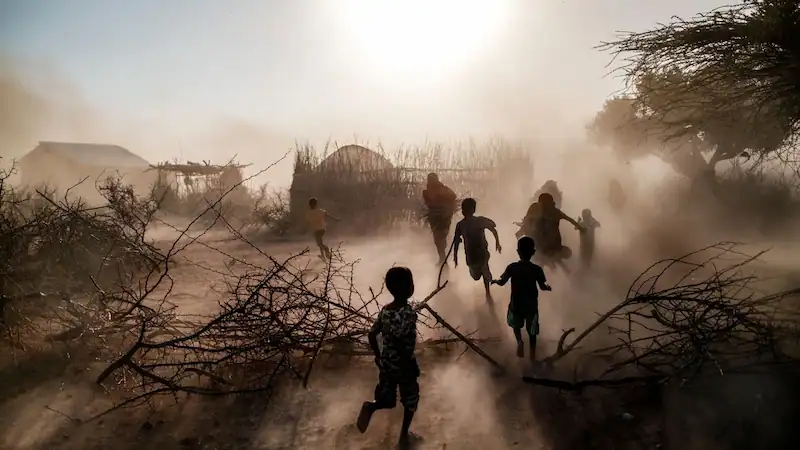


New data released by UNICEF reveals that over the span of six years, from 2016 to 2021, a staggering 43 million children have been uprooted from their homes due to floods, storms, droughts, and wildfires. This alarming statistic equates to an average of 20,000 children displaced every single day as a direct consequence of extreme weather events fueled by climate change.
The study found that floods and storms were responsible for a staggering 95% of all recorded child displacements, with droughts and wildfires accounting for the remaining cases. UNICEF executive director Catherine Russell expressed her concern about the traumatic impact of such events on children, stating, "It is terrifying for any child when a ferocious wildfire, storm, or flood barrels into their community."
Remarkably, this report marks the first time that children displaced by weather-related disasters have been given statistical visibility. UNICEF highlighted the significance of shedding light on this issue, noting that until now, these children had been overlooked in the conversation surrounding climate change and its consequences.
Regions in East Asia and the Pacific have been disproportionately affected by these events. In 2020, Cyclone Amphan alone led to the displacement of 1.5 million children across India, Bangladesh, Myanmar, and Bhutan. The following year, Typhoon Rai resulted in 1.5 million child displacements across the Philippines, Palau, and Vietnam.
When considering the overall number of displacements, three countries stood out as the most heavily impacted: the Philippines, India, and China. These countries recorded a staggering total of 23 million children forced to leave their homes and schools due to natural disasters during the six-year period.
The vulnerability of these countries to floods and storms, coupled with their large populations, contributes to their high displacement rates. However, it is worth noting that all three nations have implemented preemptive evacuation plans, which may account for the relatively higher number of displacements.
However, a different picture emerges when examining child displacements relative to the population size of each country. In Dominica, a small Caribbean island devastated by Hurricane Maria in 2017, an alarming 76% of the child population was displaced during this six-year period.
Meanwhile, South Sudan and Somalia experienced the highest proportion of child displacement resulting from flooding, with 11% and 12% of children having to flee their homes, respectively. The report emphasizes that these countries have implemented fewer evacuation plans, leaving children even more vulnerable to the impact of natural disasters.
Additionally, drought, particularly in Somalia, Ethiopia, and Afghanistan, has contributed to over 1.3 million children being uprooted from their homes. It is important to note that these statistics may be conservative, as there is limited available data for slow-onset disasters like drought.
The findings of this UNICEF report underscore the urgent need for global action to address climate change and its devastating consequences on children. Efforts must be made to strengthen disaster preparedness and response systems, particularly in regions most susceptible to extreme weather events. Protecting the world's children from the impacts of climate change should be a top priority, ensuring their safety, well-being, and future.