


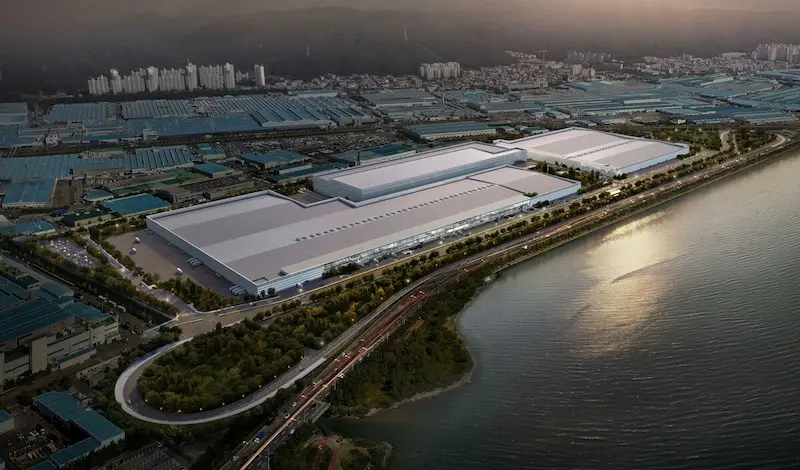


Hyundai Motor Co. has officially announced its plans to construct a state-of-the-art electric vehicle (EV) manufacturing plant in Ulsan, South Korea. The groundbreaking ceremony took place on Monday, marking a significant milestone for the carmaker as it steps up its commitment to sustainable mobility. With an investment of 2 trillion won ($1.5 billion), the new plant will cover an expansive 548,000 square meters of land at a former motor racing circuit within Hyundai's existing Ulsan factory complex.
Mass production at the facility is set to commence in the first quarter of 2026, with an initial focus on manufacturing the luxury Genesis large-size sport utility vehicle. This move aligns with Hyundai's wider strategy to expand its EV lineup and capitalize on the growing demand for electric cars in the global market.
The decision to build a new EV plant in South Korea was met with great enthusiasm from Hyundai's union and city officials who have long advocated for such an initiative. Ulsan, the city where the ceremony took place, has a deep connection with Hyundai, as it was where the company established its first automobile manufacturing plant back in 1968.
During the ceremony, Mayor Doo-gyum Kim expressed his gratitude and support, stating, "Ulsan is surviving because of Hyundai. We love you, Hyundai!" Hyundai's Executive Chair, Chung Euisun, emphasized the significance of Ulsan in the country's automotive industry history, stating that the new EV-dedicated plant's smart mobility technology would enhance workplace efficiency and safety.
This new plant in Ulsan will have an annual production capacity of 200,000 EVs, contributing significantly to Hyundai Motor Group's goal of producing 1.51 million EVs per year in Korea by the end of the decade. The group, which encompasses the Hyundai, Kia, and Genesis brands, aims to achieve a global EV production of 3.64 million vehicles annually.
In addition to the Ulsan plant, Hyundai is also progressing with the construction of an EV manufacturing facility in the United States, specifically in Georgia. This move is in alignment with President Joe Biden's Inflation Reduction Act, which provides tax credits to domestically manufactured EVs. Meanwhile, Hyundai's affiliate, Kia Corp., is building its own EV plant in Hwaseong, South Korea.
Despite recent concerns surrounding slowing demand for EVs, Hyundai remains steadfast in its belief that the future of the automotive industry is centered around electrification. Hyundai Chief Executive Officer Jay Chang acknowledged the ongoing challenges related to EV infrastructure and charging inconveniences. However, Chang affirmed that EVs are still leading the global automotive trend, indicating the company's dedication to driving forward the electric mobility revolution.
As Hyundai forges ahead with its ambitious EV production plans, the establishment of the Ulsan plant marks a significant step in expanding its manufacturing capabilities and solidifying its position as a key player in the growing electric vehicle market. With its investment in cutting-edge technology, Hyundai aims to provide consumers worldwide with innovative and sustainable transportation solutions as it works towards a greener future.