


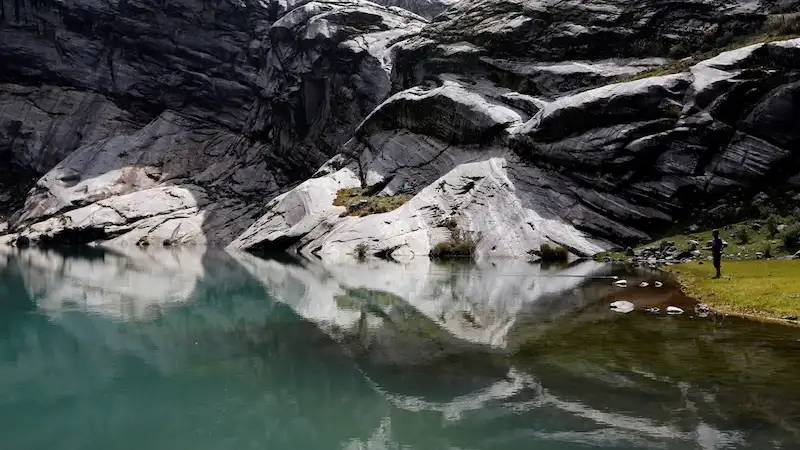


Peru, home to 68% of the world's tropical glaciers, has witnessed a devastating loss of 56% of its glacial ice over the past six decades due to the impacts of climate change, according to a recent government inventory. The National Institute of Research of Mountain Glaciers and Ecosystems has stated that rising temperatures have contributed to the rapid melting of glaciers, leading to the formation of new mountain lagoons. While these lagoons pose a flooding risk, they may also serve as potential water reserves in the future.
Using satellite imagery until 2020, the report reveals that Peru currently has 2,084 glaciers spanning an area of 1,050 square kilometers (405 square miles). This is a significant decrease from the 2,399 square kilometers of ice and snow observed in 1962. The loss has been particularly pronounced in the Ancash region, where many glaciers have disappeared over the past four years.
An alarming consequence of glacial melting is the creation of 164 new lagoons and the ongoing formation of others within the past four years alone. The total number of glacial lagoons in Peru has now reached 8,466, covering approximately 1,081 square kilometers. While these lagoons hold the potential to become vital water resources, the risk of overflow and flooding is a major concern.
The elevation of Peru's tropical glaciers is above 6,000 meters (19,685 feet) above sea level, whereas the newly formed lagoons are situated at altitudes ranging from 4,000 to 5,000 meters. This notable discrepancy underscores the extent of glacial retreat and its direct impact on local water supplies. Nearly 20 million Peruvians rely directly or indirectly on the water that originates from these glaciers, emphasizing the significance of this issue.
Peru's Environment Minister, Albina Ruiz, expressed concern over the rapid depletion of water reserves and its adverse effects on the natural mountain ecosystem. While preventing the disappearing of glaciers entirely might be beyond our control, Minister Ruiz emphasized the need to slow down the pace at which they are vanishing. Urging for reduced pollution levels, increased green areas, and a greater recognition of the importance of mountains, Ruiz emphasized the vital role that these natural features play in sustaining life.
The staggering loss of Peru's tropical glaciers serves as an alarming reminder of the consequences of climate change. It highlights the urgent need for global action to combat these environmental challenges and protect the world's water resources. Moreover, the situation in Peru underscores the importance of integrating sustainable practices, reducing emissions, and preserving fragile ecosystems to secure a more resilient future for our planet.