


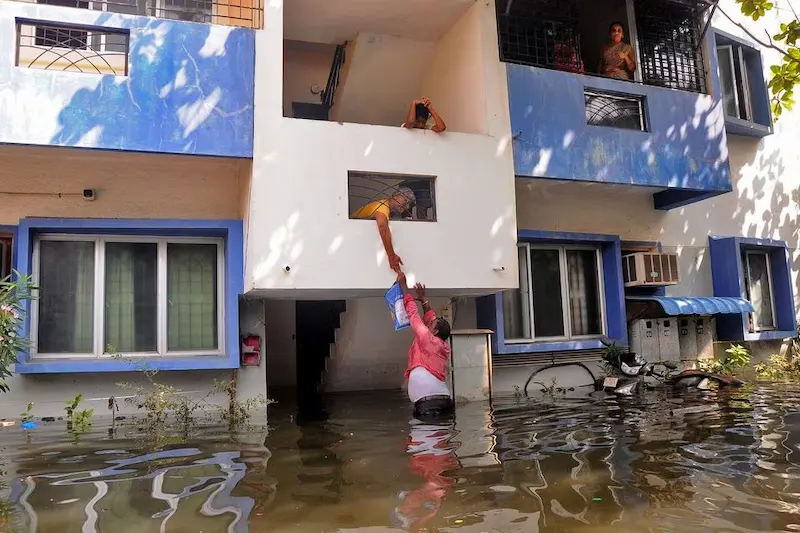


The coastal district of Chennai in southern India continues to grapple with the aftermath of Cyclone Michaung, as stagnant water and flooding persist four days after the storm hit. The torrential rains triggered by the cyclone have led to the deaths of at least 14 people, primarily in Chennai and its state of Tamil Nadu. While the cyclone itself made landfall further north in Andhra Pradesh, low-lying areas of Tamil Nadu remain inundated. Government officials and volunteers are working tirelessly to reach residents stuck in their homes, particularly those in slums and other vulnerable areas, providing them with essential food and supplies.
The Chennai area is a key hub for technology and automobile industries, housing the Indian units of global firms like Hyundai Motor, Daimler, Foxconn, and Pegatron, which undertake contract manufacturing for Apple. While some manufacturing plants, including those of Foxconn and Pegatron, resumed operations swiftly after the cyclone, some TVS group plants in the worst-affected areas are still closed. Adani Krishnapatnam Port in Andhra Pradesh has also been severely affected, declaring a force majeure period from December 3. This notice relieves the company of contractual obligations due to events outside its control.
Madras Fertilizers, a state-run company, announced the temporary closure of its Chennai plant, with tentative plans to resume operations in two to four weeks. The impact of the cyclone on infrastructure has had wider implications as well. Information technology (IT) service providers have directed their employees to work from home, while schools and colleges have closed. In some cases, educational institutions have been converted into temporary shelters for those displaced by the flood.
The recent floods in Chennai bring back memories of the devastating floods that occurred eight years ago, claiming the lives of nearly 290 people. The question of the city's infrastructure has once again come to the forefront, with concerns raised about its ability to handle extreme weather conditions. Social activist Nityanand Jayaraman notes that rampant urbanization has encroached upon open spaces like marshlands and flood plains, exacerbating the problem at hand. While experts suggest that improved stormwater drainage systems may not have been able to prevent the flooding caused by exceptionally heavy rainfall, there is a consensus that such measures would still prove beneficial in managing moderate to heavy rains.
Recognizing the severity of the situation, Defense Minister Rajnath Singh visited Chennai on Thursday. He announced that the central government would release a second installment of 4.5 billion rupees ($54 million) to Tamil Nadu to aid in managing the damage caused by the cyclone. Additionally, the federal government has approved a 5.6 billion-rupee project dedicated to flood management in Chennai. However, as Chennai residents continue to grapple with the consequences of the cyclone, the inherent vulnerabilities of the city's infrastructure remain a topic of concern.