


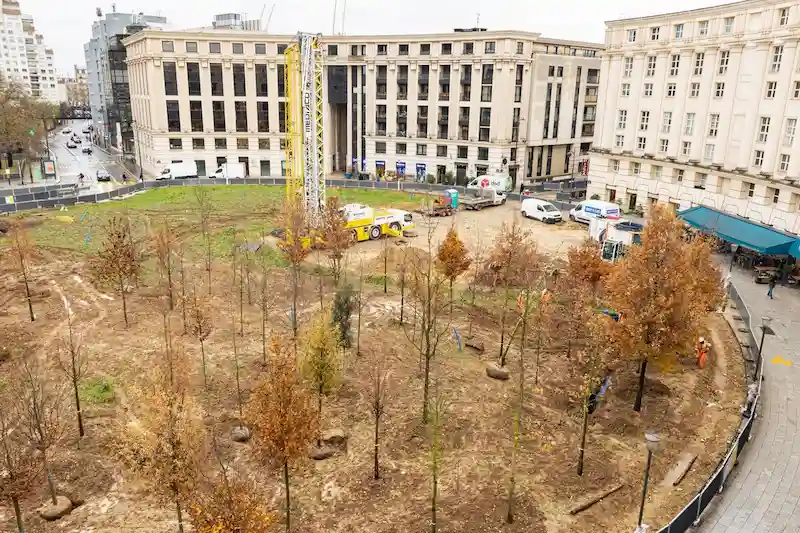


Paris is taking a significant step forward in its ambitious plan to create an "urban forest" that will cover up to half of the city. The initiative, aimed at reducing summer heat, increasing flood resilience, and combating carbon emissions, began with the planting of a micro-woodland consisting of 478 trees in Place de Catalogne, located in the southern part of the city. The trees, including oak, ash, maple, and cherry, range from saplings to semi-mature ones. This marks the first major action towards achieving Paris's goal of having 50% of its ground area covered with water permeable surfaces, green roofs, mini-gardens, avenues, and new parks by 2030. In 2013, the city had 29.6% coverage, which increased to 32% in 2020.
The decision to transform Place de Catalogne into a green space demonstrates the urgent need for Paris's urban forest plan. Currently, the square, which was developed in the 1970s and '80s with a focus on accommodating cars, lacks the charm and tranquility typically associated with Paris. The absence of shaded areas and the overwhelming presence of hard surfaces lead to the formation of a heat island, causing discomfort to residents and visitors alike. By covering 60% of the square's surface with planted areas, the city estimates that summer temperatures could be reduced by up to 4 degrees Celsius (7.2 degrees Fahrenheit). This not only enhances the overall quality of life but also improves public health, especially since the square has been reorganized to prioritize bikes and pedestrians over cars.
While the greening of Place de Catalogne is a significant milestone, not all aspects of Paris's plan have progressed as intended. Initially, the initiative garnered attention with captivating renderings of iconic public spaces such as the Opera Garnier square, the plaza outside City Hall, and the vicinity around Gare de Lyon transformed into lush green areas. Unfortunately, due to technical and budgetary constraints, plans for mini-woodlands in these locations had to be abandoned. Discussions are still ongoing regarding the transformation of the Place de l'Hotel de Ville into a wooded area, making the renderings of it as a grove of tall pine trees increasingly uncertain.
On the other hand, Paris has been diligently moving forward with its greening efforts. Since November 2020, over 63,000 trees have been planted across the city. The next significant undertaking will be the opening of a new 3.5-hectare (8.7-acre) park on the eastern edge of Paris, along the route of the disused Petite Ceinture railway. The park will maintain the railway tracks in place in case future administrations decide to reinstate train services. Additionally, the city plans to plant trees in 200 more streets within the next few years, aiming to add 170,000 additional trees by 2026.
This progress is encouraging for Parisians who aspire to see a greener, cooler, and healthier city. However, as experiences from other cities worldwide have shown, establishing new green spaces is only the beginning of the challenge. Keeping the trees alive requires ongoing maintenance, resources, and a commitment to their long-term survival. Paris must remain dedicated to supporting and nurturing its urban forest if it hopes to fully reap the benefits of a greener and more sustainable city.