


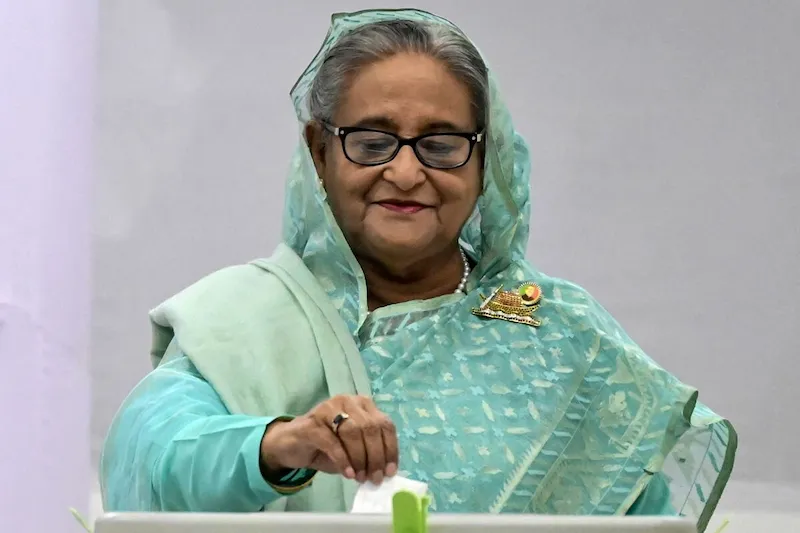


Bangladesh Prime Minister Sheikh Hasina is set to retain her position as the world's longest-serving female head of government after her party, the Awami League, won a sweeping majority in the country's elections. The Awami League secured at least 157 of the 299 parliamentary seats, ensuring a simple majority, according to polling data released by major television networks. The election, however, was marred by a boycott from opposition parties and low voter turnout.
The Election Commission reported that the voter turnout stood at around 40%, a significant drop from the 80% participation seen in the 2018 elections. This decrease in participation can be attributed to the opposition Bangladesh Nationalist Party's campaign, urging citizens to boycott the election in protest against the government's crackdown on dissent in the lead-up to the polls.
The election campaign itself was marked by daily street protests, the imprisonment of Nobel Peace Prize winner Muhammad Yunus, and videos of ruling party leaders pressuring voters to cast their ballots under the threat of losing government benefits. Heavy security measures were implemented in Dhaka, and clashes between opposition supporters and police officials were relatively sparse.
Despite her party's victory, Prime Minister Hasina refrained from organizing celebratory rallies as the country remains tense. Recognizing the significance of democracy, she urged voters to exercise their rights and expressed her commitment to ensuring its continuation. Hasina's leadership has been associated with impressive economic growth, poverty reduction, and development efforts, although her tenure has also seen increased authoritarian tendencies.
However, Bangladesh's economy is currently facing challenges, including a shortage of dollars, leading to credit rating downgrades by agencies like Moody's Investors Service. The government had to secure emergency loans from the International Monetary Fund due to the impact of the pandemic and escalating commodity prices, which severely affected foreign exchange reserves.
Approximately 120 million people were eligible to vote for 299 out of the 350 parliamentary seats. Prominent leaders from the Awami League were captured in social media videos warning voters that they risked losing their benefits if they did not participate in the elections. In response to Hasina's refusal to step aside and allow a caretaker government to oversee the poll, the opposition BNP boycotted the elections. The Awami League aimed for a 50% turnout and even allowed some leaders to contest as independent candidates in an effort to boost voter interest.
As polling stations closed, opposition leaders praised those who abstained from casting their votes as a sign of the people's discontent with the government. They promised to continue their peaceful movement with the support of the people. In the months leading up to the elections, several opposition leaders were arrested. Khaleda Zia, the main rival of Sheikh Hasina and leader of the BNP, currently faces suspended jail sentences on corruption charges that her supporters claim were politically motivated.
Human Rights Watch released a report in November stating that nearly 10,000 opposition activists had been arrested since the BNP's planned rally on October 28. Furthermore, Nobel laureate Muhammad Yunus received a six-month jail sentence last week, a case his supporters argue was politically motivated.
As Sheikh Hasina readies herself for a fourth consecutive term as Prime Minister, her administration faces both political and economic challenges. The result of the elections has further highlighted the deep divisions within Bangladeshi society, creating a more complex landscape for governance in the upcoming years.