


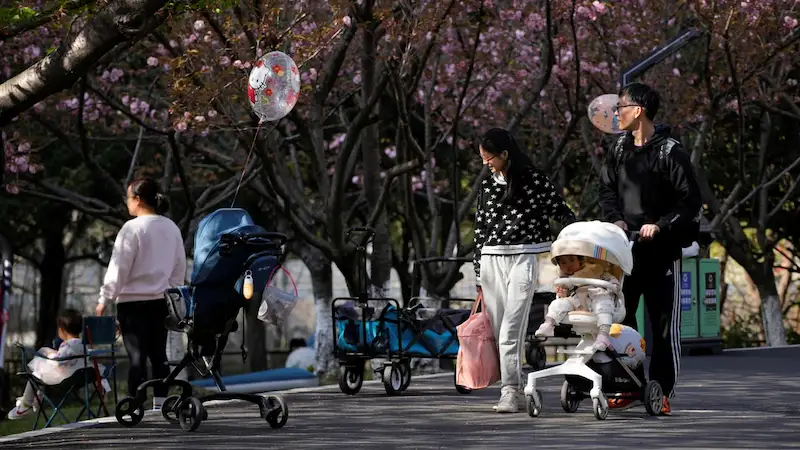


China's population continues to shrink as its birth rate hits a record low in 2023, marking the second consecutive year of decline. The National Bureau of Statistics revealed that there were only 6.39 births per 1,000 people, the lowest since the founding of Communist China in 1949. This demographic challenge poses significant implications for the world's second-largest economy.
In 2023, China saw 9.02 million births, a decrease from 9.56 million in the previous year. Furthermore, the overall population dropped by 2.08 million people, bringing the total population down to 1.409 billion. While the decline in birth rate can be partially attributed to the lockdowns implemented during the pandemic, experts predict that the downward trend will persist, although there may be a rebound in births in 2024.
The shrinking population comes at a time when China's economy is facing challenges. The NBS confirmed that China's GDP grew by 5.2% in 2023, slightly below the government's target of around 5%. Although this growth rate is an improvement from the previous year's 3%, it is still one of the country's weakest economic performances in over three decades.
The release of this data had a negative impact on Chinese stocks, with Hong Kong's Hang Seng Index closing down 3.7% and the CSI300 falling 2.2%. These indexes had already experienced a dismal year in 2023, declining more than 10% each.
The decline in population and economic growth indicates that China needs to make substantial structural changes in its economy. Sectors like healthcare and housing will need to be reshaped to accommodate the challenges posed by the shrinking population.
Despite the overall economic struggles, there was a temporary boost in China's fourth-quarter GDP growth, which reached 5.2%. However, experts suggest that this growth may not be sustainable. Factors driving this temporary boost include pent-up demand during the holiday season and the low base effect from the previous year. It is predicted that China's GDP growth will decelerate to 4.1% in 2024 due to various headwinds such as the ongoing property downturn and subdued consumption.
The property crisis in China continues to persist as home prices fell by the highest amount in nearly nine years in December. Property investment also experienced a decline for the second consecutive year, falling by 9.6% in 2023 compared to the previous year. The property sector has traditionally played a significant role in China's economy, accounting for up to 30% of GDP. However, with an aging population and decreasing housing demand, the sector's prospects for growth are diminishing.
The declining birth rate coincides with a shrinking workforce and a rapidly aging population, posing challenges for the Chinese government. As the number of elderly citizens increases, there is a need for funding healthcare and pensions while maintaining economic growth with fewer working-age individuals.
To address the challenges posed by the aging population, China's State Council released guidelines to strengthen the "silver economy." These guidelines encourage companies in various sectors to tailor their services and products to cater to the elderly population. They also emphasize the importance of land development and local government financing to support facilities for aging residents.
China's death rate and number of fatalities also saw an increase in 2023 compared to the previous year. The reported death rate was 7.87 per thousand people, with 11.1 million deaths recorded. However, experts suggest that these figures may not fully capture the actual number of COVID-19-related deaths, as China has been criticized for a lack of transparency in reporting such data.
In addition to the demographic challenges, China's economic woes include rising youth unemployment. The National Bureau of Statistics reintroduced the monthly youth unemployment rate, which stood at 14.9% in December for the age group of 16 to 24. There is also a new unemployment category for individuals aged 25 to 29, which had an unemployment rate of 6.1% in December.
Despite some positive indicators such as industrial production growth and increased retail sales, the mixed data suggests the need for further stimulus measures from the Chinese government to ensure economic recovery in 2024. The ongoing property crisis and subdued consumption will likely require continued policy easing to support economic growth.