


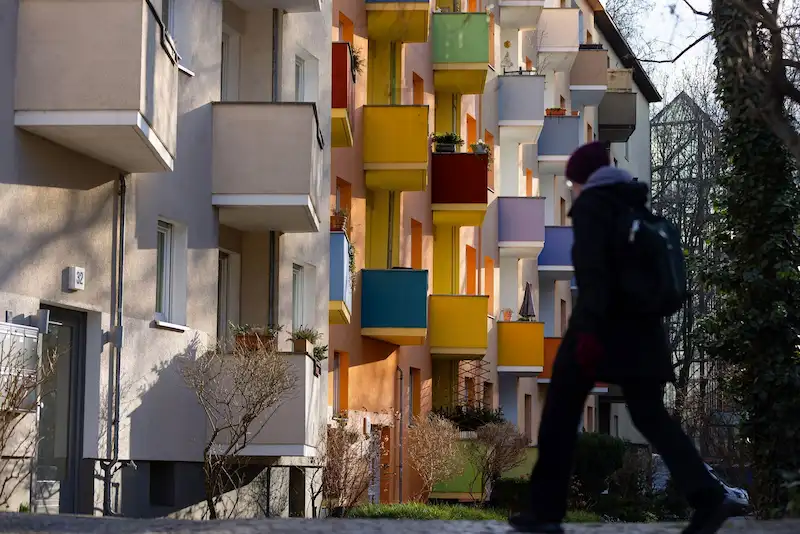


Berlin's housing market is defying the odds as it continues to attract investors despite slumping prices across Germany. The steady influx of residents to the capital, coupled with lagging home construction, has led to a shortage of housing that is driving up rents. This shortage has piqued the interest of deep-pocketed investors looking to take advantage of the lucrative rental market.
After a brief dip following rate hikes, housing prices in Berlin have been on the rise for four consecutive months. Data from online real estate broker Immowelt shows that Berlin was the only major German city where home costs grew by more than 1% in the last quarter of 2023, in contrast to declines in Frankfurt and Munich.
Andreas Polter, who leads real estate manager JLL's residential investment team in Berlin, highlights the city's appeal to international investors. Berlin offers the prospects of further rent hikes, relatively affordable prices compared to other European capitals, and a large rental market. Only 15% of Berliners live in their own homes, making it an attractive market for investors.
Berlin's rebound in housing prices aligns with other major cities grappling with a lack of housing supply. Stockholm, for example, has seen eight straight months of year-on-year increases in housing prices. The housing market in several European cities, including Athens, Madrid, and Lisbon, is also showing gains.
However, Berlin still faces challenges in meeting the demand for affordable housing. The German government's failure to deliver on its promise of building 400,000 homes per year has led to concerns of a potential shortfall of 750,000 apartments by 2025. The mismatch between population growth and home construction is exacerbating the housing shortage in Berlin.
Tensions surrounding housing affordability are high in Berlin, especially in trendy neighborhoods like Kreuzberg. In 2021, a referendum passed, demanding authorities to expropriate large landlords to increase public housing stock. Though the legislation was struck down in court, it impacted the supply of rental properties, further driving up rents. As a result, even solvent households are finding it increasingly challenging to secure suitable rental apartments.
The population of Berlin grew by over 80,000 people in 2022, with a significant influx of Ukrainians fleeing Russia's invasion. Meanwhile, the city only constructed just over 17,000 new apartments during the same year, failing to keep pace with the population growth. This disparity, coupled with higher financing costs, has created opportunities for large investors to acquire rental properties in Berlin.
While prices for older buildings, which often have tenants on cheaper contracts and require substantial renovation costs, continue to fall in Germany, newbuild projects have recorded a slight uptick. This divergence has made new projects more attractive to investors. Real estate companies burdened with debt from the cheap-money era are now selling properties to refinance, further contributing to the demand for newbuilds.
Despite debates surrounding expropriation and interventions in the rental market, international investors still view Berlin as a top-class investment destination, according to JLL's Polter. The city's appeal, with its growing population, rental market potential, and relatively affordable prices compared to other European capitals, positions it as a lucrative market for investors.
As Berlin's housing market booms, it is crucial for policymakers to address the housing shortage and ensure the availability of affordable accommodation for all residents. Only with strategic measures and increased construction efforts can Berlin meet the growing demand and maintain a healthy housing market.