


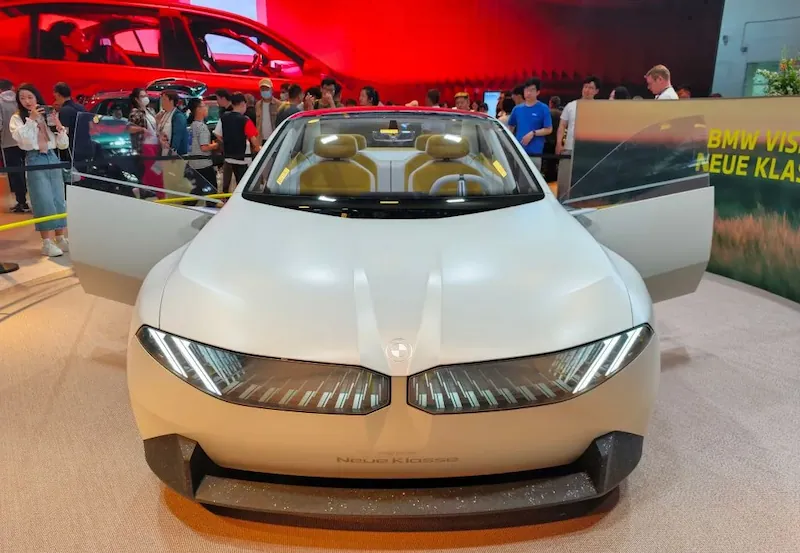


The third-quarter sales figures for BMW AG and Mercedes-Benz Group AG in China painted a grim picture for the German automakers, with both companies experiencing substantial declines in sales. BMW and Mini cars saw their steepest drop in over four years, plummeting by 30%, while Mercedes deliveries in China fell by 13%, particularly affecting their luxury models like the S-Class and Maybach.
The landscape of the Chinese automotive market is rapidly evolving, with a significant shift towards electric vehicles and plug-in hybrids. Local manufacturers like BYD Co. have capitalized on this trend, offering innovative and more affordable electric models that have garnered consumer interest. Data from the China Passenger Car Association reveals that EVs and plug-in hybrids now account for over 50% of car sales in the country.
While Chinese carmakers thrive, German giants like Volkswagen, BMW, and Mercedes are struggling to keep up. Factors such as a prolonged real estate crisis impacting consumer spending on high-end goods, the declining popularity of gasoline-powered cars, and the economic stimulus boosting demand for EVs have all contributed to the challenges faced by the German automakers.
The specter of escalating trade tensions further looms over the German carmakers, with discussions of potential tariff increases on imported large-engine vehicles. Additionally, the recent profit warnings issued by BMW, Mercedes, and VW have further eroded investor confidence in these companies.
In this scenario, BMW's foray into the electric vehicle market offers a ray of hope. Despite the overall sales decline, BMW's EVs, including the i4 sedan and iX1 SUV, saw a 10% increase in deliveries compared to the previous year. This contrasts starkly with Mercedes, which reported a significant drop in wholesale deliveries of passenger EVs.
Mercedes, in particular, has been facing challenges in China, where younger consumers are gravitating towards local brands known for their advanced in-car technology. Chinese brands dominated the electric vehicle market in July, with only Tesla's Model Y making the top-selling list. The tepid response to Mercedes' latest EV offerings in China underscores the struggle faced by traditional German automakers in adapting to changing consumer preferences in the world's largest auto market.
As Volkswagen prepares to report its third-quarter deliveries, the industry is watching closely to see how the German automaker navigates the evolving landscape of the automotive industry, particularly in China. The road ahead remains challenging for German automakers, who must now confront not only shifting consumer demands but also geopolitical uncertainties that threaten to disrupt their traditional dominance in the market.