


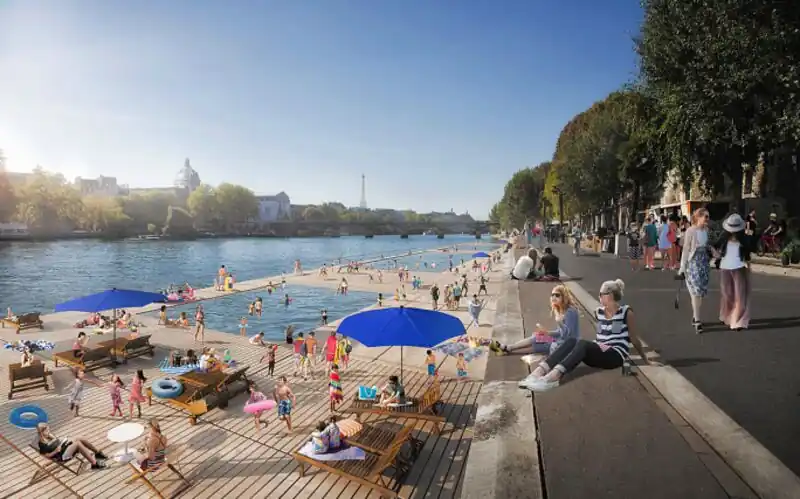


Paris is on track to clean up the River Seine, and make it swimmable in time for the 2024 Summer Olympics. This is a remarkable achievement for a river that was once notorious for being a dirty and polluted waterway, and could allow Paris to host aquatic competitions in one of the most picturesque metropolitan riverscapes in the world.
The goal is for the Seine to become a permanent swimming spot after the Olympics. By 2025, the city plans to open five permanent bathing facilities along the river, including two in the city center, one at the foot of the Eiffel Tower, one in the Bois de Boulogne park, and one in Bercy in southeastern Paris. The city also plans to expand the network of bathing spots to include up to 23 more swimming spots in the Seine and its upstream tributary, the Marne, across Greater Paris. This initiative will overturn 101 years of official disapproval of Parisian river bathing, which started in 1923 when the city banned Seine swimming and put an end to the open-bottomed swimming boats that used to throng the quayside.
However, rogue swimmers continued to flout the rules for decades, but the increased pollution that accompanied Paris’s late 20th century expansion has largely stopped even the foolhardy from taking a dip. Bathers have been deterred by frequent high levels of waterborne bacteria and the risk of contracting potentially fatal Leptospirosis from rat urine. City officials routinely fish out rusty bicycles, crates, and other large objects from the river.
The city has invested €1.4 billion ($1.54 billion) in a vast new storm drain with a capacity of up to 30 Olympic swimming pools and has banned boats from releasing their dirty water into the river. It has also offered people who live on boats up to €6,000 to convert their craft so that it can discharge at a municipal pumping station. Additionally, the city has embarked on a city-wide tree-planting program that will allow the city’s soil to absorb more rain by creating more open, water-permeable ground.
Despite the challenges, the city is confident that the water quality in the Seine is now safe for swimming. In 2022, tests of river water at planned Olympic sites on the same summer days that the games will run next year found that water quality was safe for swimming 91% of the time. The clean-up will also contribute to Paris’s resilience by reducing pollution and mitigating the city’s heat island effect. Making the Seine quayside swimmable would also attract many visitors and contribute to the region’s biodiversity.
Overall, this initiative could have a positive ripple effect for further climate and environmental action by showing people that a cleaner, greener future will not just demand lifestyle changes but also offer new spaces for peace and pleasure.