


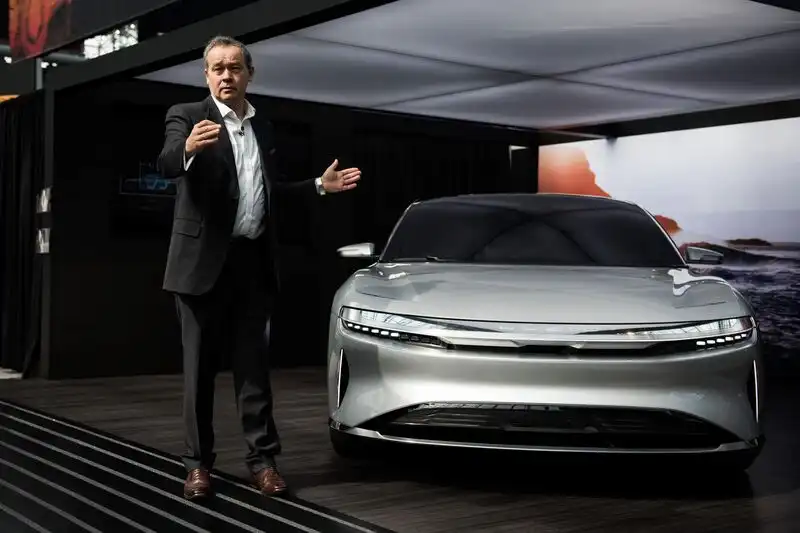


Tesla Inc.'s recent success in convincing other automakers to adopt its charging standards has sparked a range of reactions from industry analysts. While some have praised Tesla's charging business as a game-changer, others have dismissed it as just a plug. Peter Rawlinson, CEO of Lucid Group Inc., falls into the latter category. As the former chief engineer of Tesla's Model S, Rawlinson brings a unique perspective to the debate.
Rawlinson compares the switch to Tesla's charging standards to a mere change in the type of connector used in a bottle, rather than a significant improvement in the quality of the product. He questions the motivations of automakers who have eagerly embraced Tesla's charging bandwagon before the connector has been standardized. Rawlinson highlights the reluctance of companies with advanced technology to risk such advancements on an unproven standard.
While Rawlinson acknowledges Tesla's Supercharger network's reliability, he raises concerns about the openness of the newly proposed North American Charging Standard (NACS). Tesla invited other organizations to use its slimmer charging connectors and ports but has yet to clarify whether NACS will be an open and impartial standard. Rawlinson fears that if one company owns the standard and the associated consumer data, it could potentially raise privacy concerns.
Rawlinson emphasizes that the focus should be on slower overnight charging infrastructure, particularly for apartment dwellers who lack convenient access to charging stations. He suggests that government funding should be directed towards supporting charging options that contribute to a more even distribution of power usage throughout the day, rather than relying heavily on fast charging during peak hours.
Rawlinson's perspective challenges the notion that Tesla's charging deals are groundbreaking and calls for a standardized, open, and future-proof solution that takes taxpayer funding into consideration. Ultimately, he argues that the best charging infrastructure prioritizes environmental sustainability and efficiency, rather than simply the fastest charging speeds.