


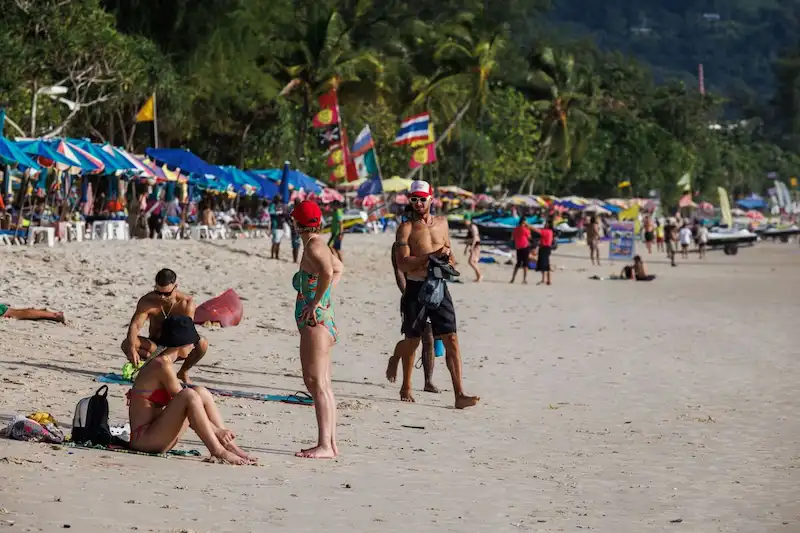


Thailand's new Prime Minister, Srettha Thavisin, is considering easing visa rules to attract more Chinese and Indian travelers, as well as extending longer stays for visitors from all countries. The aim is to boost tourism revenue to nearly $100 billion next year.
Chinese tourists, who were the largest group of visitors before the pandemic, have faced a costly and cumbersome visa application process, which has hampered the number of arrivals this year. Similarly, travelers from India have had to pay a 2,000 baht ($57) fee for a 15-day visa on arrival. Prime Minister Srettha believes that expanding the list of visa-exempt countries and increasing the stay limits for most international travelers will help attract more visitors from around the world.
In a meeting with executives of Airports of Thailand and airline representatives on Monday, Srettha discussed options to attract more foreigners in the fourth quarter, which is typically the peak season for tourism. The airport operator has agreed to reduce bottlenecks and increase flights capacity by 20%, as well as find ways to expedite immigration clearances.
The new government's goal is to raise foreign tourist revenue to 3.3 trillion baht next year, as the travel industry offers the best short-term economic stimulus. Tourism currently accounts for about 12% of Thailand's gross domestic product and nearly a fifth of its jobs, according to the Bank of Thailand.
Tourism leaders, such as the president of the Phuket Tourism Association, have suggested that scrapping the visa application fee would be more beneficial than offering visa exemptions to Chinese and Indian visitors. They argue that visa fee exemptions would be a quick win for tourism, as the recovery rate for Chinese arrivals currently stands at only 30%.
On Wednesday, Prime Minister Srettha met with representatives from the transport industry to discuss strategies for expanding tourism across all regions. He also took stock of popular tourist destinations, including Chiang Mai and Chiang Rai, and addressed steps to prevent air pollution that hurt the industry earlier this year.
According to Nomura Holdings Inc., foreign tourist arrivals in Thailand are expected to reach 30 million in 2023, almost triple last year's figures. The Ministry of Tourism and Sports reported that the tally has already exceeded 17.5 million this year. However, the return of Chinese tourists has been slower than expected, even though China was the largest source of travelers last month.
One reason for the sluggish recovery of Chinese arrivals is the stringent e-visa requirements implemented in May, especially for group travelers. Thailand's reliance on tourists from lower-tier cities, which may be more sensitive to China's economic difficulties, also hampers the recovery.
To compensate for the decline in Chinese tourists, the Phuket Tourism Association has recommended increasing flights to Phuket and Krabi provinces and extending visas for tourists from Belarus, Kazakhstan, and Russia, who typically spend more compared to visitors from China and Malaysia.
While Srettha's plans to ease visa regulations and attract more tourists may have some impact, the overall demand for travel is also dependent on external factors such as China's economic outlook and consumer sentiment. If these factors weaken, the effectiveness of supply-side measures to attract tourists may diminish.