


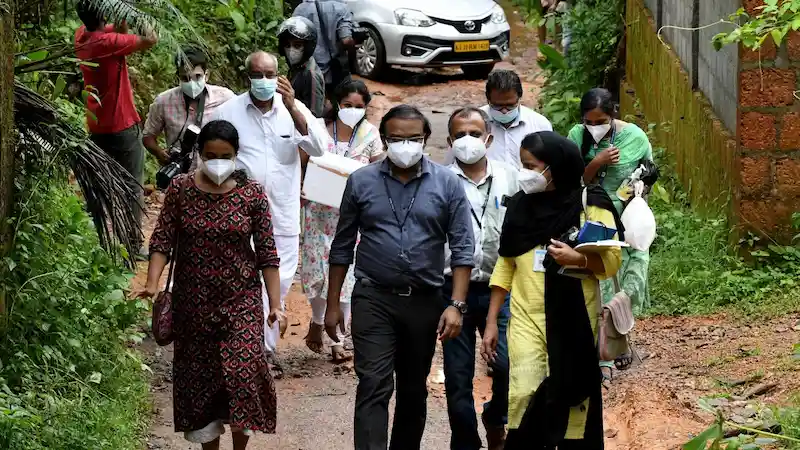


Authorities in the southern Indian state of Kerala are taking urgent measures to control a severe outbreak of the Nipah virus. Two individuals have already lost their lives to this rare and often fatal disease, prompting the closure of schools and the testing of hundreds of people to prevent further spread.
The Chief Minister of Kerala, Pinarayi Vijayan, has confirmed that the virus has been detected in the Kozhikode district and has urged residents to exercise caution and adhere to the safety guidelines provided by the health department. This marks the fourth outbreak of Nipah in the state since 2018.
Nipah virus is a zoonotic disease, meaning it is transmitted from animals to humans. However, it can also be spread through contaminated food or directly between people. The symptoms of Nipah infection can range from mild to severe, starting with headaches and drowsiness but potentially progressing to coma and severe respiratory and neurological complications.
Unfortunately, there is currently no vaccine available for Nipah, and treatment options are limited to supportive care. As a result, the emphasis is on prevention and containment measures. In Kerala, more than 700 individuals who had close contact with the infected cases are being tested for the virus. Out of these, 77 are considered high-risk and have been asked to self-isolate and monitor their health.
In the Kozhikode district, where the outbreak is concentrated, authorities have closed some schools, and seven villages have been designated as containment zones. These measures are aimed at minimizing further spread and preventing panic among the local population.
Kerala has had previous experiences with Nipah outbreaks, with the most devastating one occurring in 2018, resulting in 17 deaths and widespread fear. In 2019, more than 300 individuals were placed under surveillance after a single case was diagnosed, and in 2021, a 12-year-old boy lost his life to the virus.
The Nipah virus was first identified during an outbreak in Malaysia in 1998-1999, where it caused significant mortality. Subsequently, outbreaks have occurred in India and Bangladesh, with human-to-human transmission being reported in some cases. The World Health Organization has labeled the Nipah virus as an urgent research and development priority due to its potential for epidemics.
The current outbreak in Kerala highlights the ongoing threat posed by Nipah and emphasizes the need for robust surveillance, rapid response, and research efforts to combat this deadly virus.