


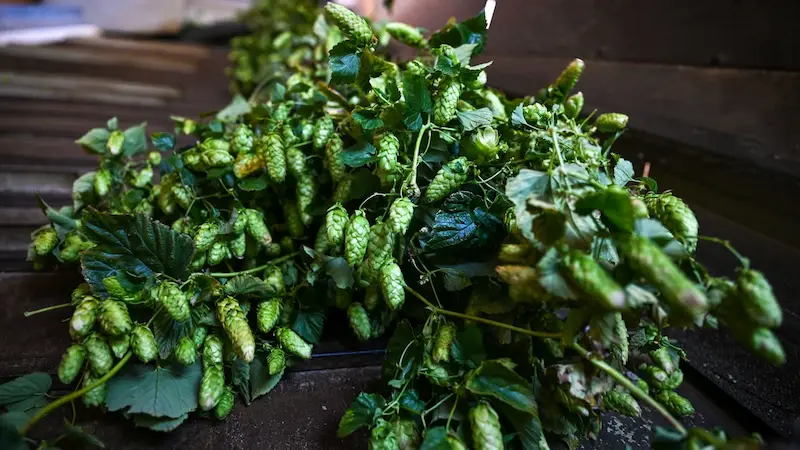


Beer lovers around the world, especially those who enjoy the hoppy goodness of their favorite brews, may soon have to face a harsh reality. Hops, a crucial ingredient in beer production, are at risk due to the climate crisis. Scientists have found that hops in major beer-producing European countries like Germany, Czech Republic, and Slovenia have been ripening earlier and producing lower yields since 1994. To make matters worse, these hops are also losing their critical bitter component, which gives beer its distinct flavor.
According to a recent study published in the journal Nature Communications, the situation is only expected to worsen. By 2050, hop yields could decline by up to 18%, while their alpha acid content, responsible for beer's bitterness, could decrease by a staggering 31%. These changes are attributed to hotter and drier conditions resulting from climate change.
The implications of this research go beyond the realm of beer. It is yet another example of how the climate crisis threatens everyday products that people often take for granted. Miroslav Trnka, co-author of the study and a researcher at the Global Change Research Institute, highlights the significance of this finding, saying, "We are really seeing changes that are affecting things that we value, like the taste of beer. Climate change really can have an effect on it, or at least have an effect on commodities that are critical for production."
The study points out that all the basic ingredients of beer – water, barley, yeast, and hops – are now threatened by global warming. Hops, in particular, are known to be finicky plants, making them vulnerable to crop failures. Such failures could force brewers to experiment with different flavor profiles using alternative hop varieties.
To assess the impact of climate change on European hops, the researchers analyzed weather data and climate models from 1970 to 2050. They observed that scorching temperatures have already caused the start of the hop growing season to shift earlier by 13 days between 1970 and 2018. This change disrupts the timing of hop harvesting and processing operations, making it more challenging for farmers to manage their crops effectively.
Moreover, the study highlights shifting consumer preferences toward higher-quality hops that produce specific aromas and flavors. These highly sought-after hops are typically grown in smaller regions, making them even more susceptible to heatwaves and droughts intensified by climate change. As a result, hop farmers have been compelled to relocate their fields in response to changing climatic conditions. However, even as growers adapt, consumer preferences may also evolve, challenging the stability of the craft beer industry.
While the study focused on major hop-growing European countries, the findings are likely representative of what could occur in beer-producing regions worldwide, including the Pacific Northwest in the United States. With record-shattering heatwaves becoming more frequent, these regions face similar challenges, albeit with slight variations in timing and frequency.
It is clear that beer, one of the world's most beloved beverages, will adapt and find its place in a hotter future. However, the taste may never be the same. The climate crisis is leaving an indelible mark on the ingredients that make beer so enjoyable, forcing us to confront the potential loss of a cherished aspect of our culinary and cultural heritage.