


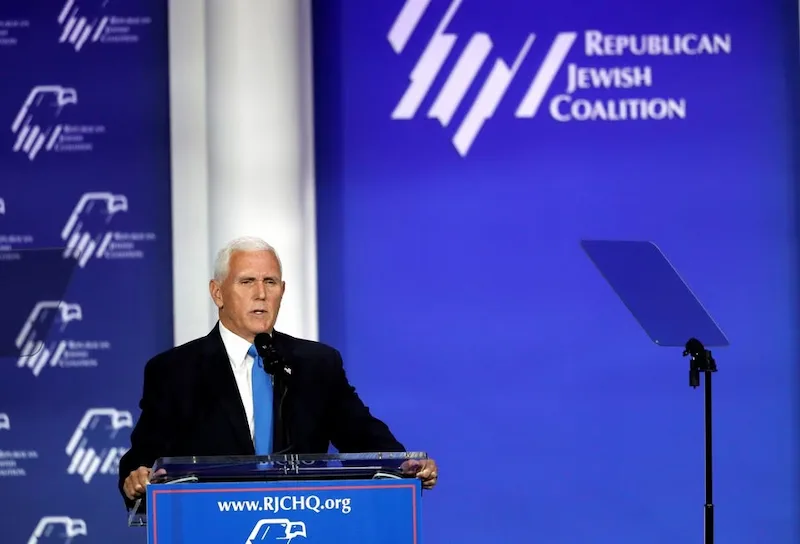


Former US Vice President Mike Pence has officially ended his presidential campaign after facing financial struggles and failing to gain traction in the Republican Party. Pence, who once served loyally alongside Donald Trump, hoped to position himself as a viable alternative to the former president. However, his decision to break with Trump and his role in certifying Joe Biden's election victory on January 6, 2021, led to a loss of support among Trump's loyal base.
During his speech at the Republican Jewish Coalition donor conference in Las Vegas, Pence conceded that "this is not my time" and acknowledged that he was unable to garner enough support from Republican primary voters. While he refrained from endorsing any specific candidate, Pence emphasized the need for choosing a leader who appeals to "the better angels of our nature" and prioritizes civility.
Pence's campaign struggled to gain momentum and financial backing since its inception in June. Despite his efforts in Iowa, which included spending significant time and resources, Pence failed to generate enthusiasm among primary voters. By October, his campaign was burdened with $620,000 in debt and had only $1.2 million in cash on hand, leaving him unable to sustain the financial demands of a presidential race.
Former vice presidents have historically succeeded in securing their party's nomination for the White House, such as George H.W. Bush in 1988 and Al Gore in 2000. However, Pence faced formidable competition in the form of Trump and other candidates who appealed more to anti-Trump primary voters, such as Nikki Haley and Ron DeSantis.
Pence's campaign positioned him as a traditional conservative, promoting both social and fiscal conservatism, as well as a hawkish approach to foreign policy. His policy stances included advocating for increased military aid to Ukraine and cuts in welfare spending. However, these positions were overshadowed by the rise of populism and isolationism within the Republican Party during the Trump era.
Ultimately, Pence's bid for the presidency was hampered by his association with an increasingly dominant Trump and his failure to connect with anti-Trump voters and donors. With Trump leading the Republican primary opinion polls by a substantial margin, Pence's departure marks a significant step towards cementing Trump's frontrunner status in the race for the GOP nomination.