


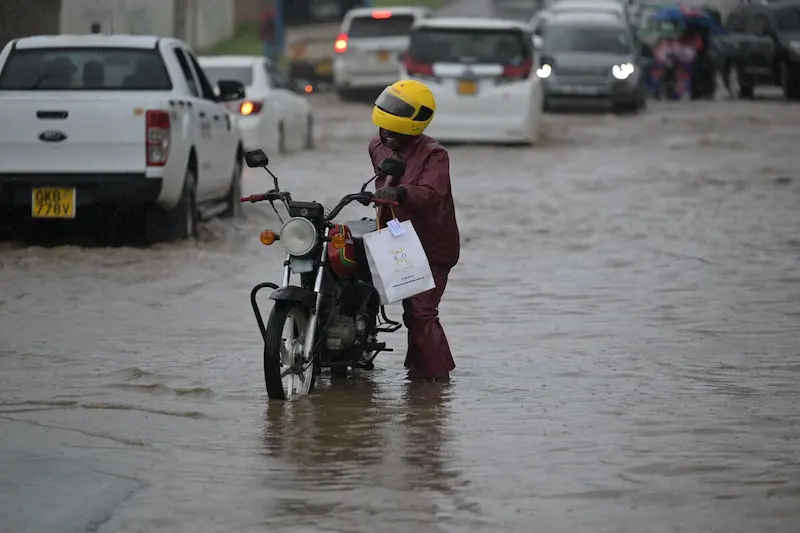


Recent research conducted by World Weather Attribution, a global climate science project, has revealed that heavy rainfall in East Africa during October and November was approximately twice as intense due to the effects of climate change. The region typically experiences a short rainy season during this time, but this year's weather was exacerbated by both climate change and the Indian Ocean Dipole (IOD), a natural climate phenomenon. The study, conducted by a team of 10 scientists, found that the impacts of the heavy rain, which resulted in the loss of hundreds of lives and widespread destruction, were intensified by the preceding three-year drought, lack of early-warning systems, and rapid urbanization.
The rainfall in East Africa claimed the lives of at least 300 people in Kenya, Ethiopia, and Somalia. In addition to the loss of lives, the heavy rain also led to the flooding of a refugee camp in eastern Kenya, destroyed homes and infrastructure, and disrupted transportation systems, further exacerbating the region's challenges. These impacts were intensified by the previous drought, leaving communities already struggling to recover from the loss of crops and livestock.
The study highlighted the compounding effects of climate change and natural climate phenomena like the IOD and El Niño. While the IOD had a comparable influence on the intensity of the rainfall, climate change played a significant role in exacerbating and making these natural cycles more extreme and unpredictable. The researchers employed historical data and simulations to compare the weather patterns with a world without climate change. Currently, the world is approximately 1.2 degrees Celsius warmer than pre-industrial levels.
The findings of this study come at a crucial time, as world leaders and negotiators gather in Dubai for COP28, the United Nations climate change conference. Countries vulnerable to climate change impacts, due to their geographical locations or limited resources to adapt, have been pushing for more ambitious climate action to phase out fossil fuels and limit global warming. However, they face opposition from economies heavily reliant on fossil fuels.
Friederike Otto, a senior lecturer in climate science at the Grantham Institute for Climate Change and the Environment, emphasized the urgency of reducing greenhouse gas emissions. Without significant changes, the frequency and intensity of extreme weather events will continue to rise, leaving communities ill-equipped and lacking the necessary resources to adapt. The study serves as a reminder that the current trajectory of fossil fuel consumption is unsustainable and will only exacerbate the devastating impacts of climate change on vulnerable regions like East Africa.