


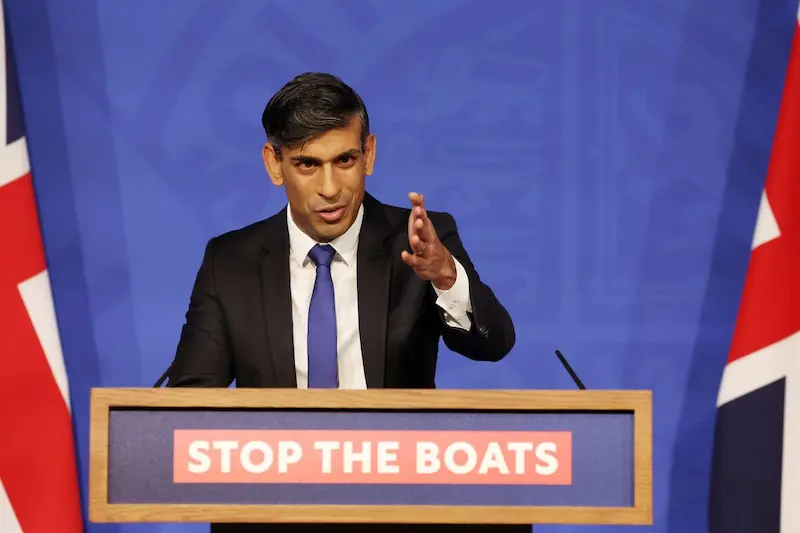


UK Prime Minister Rishi Sunak is facing a political storm over his controversial immigration policy that involves deporting asylum seekers to Rwanda. The plan, which was initially devised by former Prime Minister Boris Johnson and Home Secretary Priti Patel, has been met with resistance from within Sunak's own government. Sunak himself had previously expressed reservations about the policy due to concerns about its effectiveness and ethical implications. However, in an attempt to appease the right-wing of his governing Conservative Party and close the gap in the polls with the Labour opposition, Sunak has made the Rwanda plan his flagship migration policy.
So far, the policy has faced significant challenges. The UK courts have ruled it unlawful, and the two senior ministers responsible for its implementation have left the Cabinet, demanding an even tougher stance on immigration. Additionally, the government has already paid Rwanda £240 million ($301 million) without any deportations taking place. As the first vote on legislation to implement the policy approaches, Sunak is now grappling with rebellions from both the right and center of his party, which could potentially undermine his political future.
The situation has become so dire that some Conservative lawmakers are plotting to oust Sunak from his position. Allies of his predecessor, Liz Truss, have reportedly discussed writing letters of no confidence in Sunak, and there are talks of right-wing backbencher Simon Clarke challenging his leadership. Sunak's apparent flip-flopping on immigration and his attempts to win favor have garnered little support from within his party or among voters.
Net immigration reaching record levels has further complicated matters for Sunak. As Chancellor of the Exchequer, he had pursued policies to encourage economic growth, such as allowing more foreign graduates to stay post-study, relaxing restrictions on migrant workers bringing dependents, and lowering the salary threshold for foreign workers. However, as Prime Minister, he announced a clampdown on legal migration, including a higher salary threshold and fewer allowances for dependents, in a bid to achieve a significant reduction in net migration.
The shift in Sunak's position on immigration policies has raised concerns about its sincerity and whether it is motivated solely by political expediency. Colleagues within his party have expressed doubts about his trustworthiness, citing the political games he played during his rise to power. The erosion of trust is evident as Tory MPs consider voting for the legislation to implement the Rwanda policy. Some right-wing lawmakers suspect a ruse between Sunak and the Rwandan government, which they believe has influenced the softer approach taken in the legislation. Downing Street has denied these allegations.
Meanwhile, moderate Tories are concerned about the UK disregarding international treaties. No. 10 Downing Street is attempting to persuade potential rebels from both sides to support the legislation, warning that any leadership crisis would further damage the party. While some Tory lawmakers had hoped that Sunak would make the next election a referendum on migration and his Rwanda policy, the recent resignation of immigration minister Robert Jenrick has complicated matters. Both Labour and the Reform Party can now cite Jenrick's criticisms as evidence of Sunak's failure.
The political environment for Sunak and his party appears precarious. Public sentiment is negative, and confidence in the government's ability to deliver on public priorities is low. The possibility of another round of Conservative infighting is unlikely to dissuade voters from seeking a change. As Sunak navigates these challenges, it remains to be seen how he will salvage his reputation and address the growing discontent within his own party.