


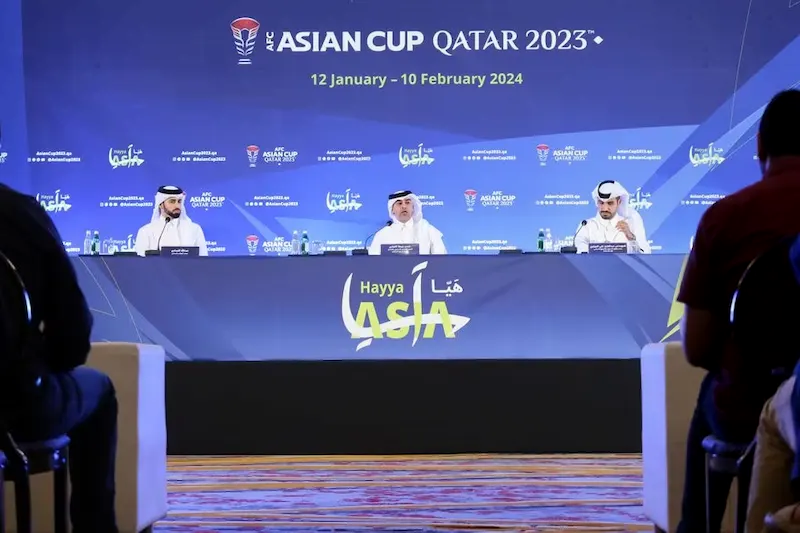


Hosted by Qatar, the delayed 2023 Asian Cup is set to begin, marking a significant moment for the Gulf region in the global football landscape. With substantial investments from Qatar, Saudi Arabia, and the United Arab Emirates, West Asia has emerged as the dominant financial power in the sport. However, it remains to be seen if this financial dominance will transfer to on-field achievements.
Qatar, the defending champions, secured their first title in 2019 with a surprising victory over four-time champions, Japan, in Abu Dhabi. Originally, China was meant to host this edition of the tournament, but due to its strict "zero-COVID" policy, Qatar has stepped in to host the event for the third time in history.
Notably, Saudi Arabia has risen as a formidable force in football, buoyed by the success of Qatar hosting the 2022 World Cup. The Saudi Arabian Football Federation secured the rights to host the 2034 World Cup after organizing the Club World Cup and winning the bid for the 2027 Asian Cup. With star signings like Cristiano Ronaldo, Saudi Pro League clubs have further disrupted regional balance, overshadowing their neighboring footballing nations.
Roberto Mancini, former coach of the Italian national team, faces the challenge of leading Saudi Arabia to their first Asian Cup title since 1996. However, many of the Saudi national team's key players have faced limited playing time due to the influx of foreign talents. This may pose a challenge to their title aspirations.
Meanwhile, Qatar aims to redeem themselves following a disappointing World Cup campaign. However, their preparations have been marred by the departure of coach Carlos Queiroz, who left after a year of mixed results. The Maroons will kick off the tournament against Lebanon in the opening game at the impressive Lusail Stadium, which hosted Argentina's victorious World Cup final against France in 2022.
While Gulf nations can boast state-of-the-art sporting infrastructure, East Asia remains home to much of the continent's top players. Japan holds the favoritism card, keeping faith in Hajime Moriyasu as coach, aiming to become the first individual to win the Asian Cup as both player and coach. Moriyasu led the Samurai Blue to impressive victories over Spain and Germany in the World Cup and oversaw a resounding 4-1 friendly win against the Germans in September.
South Korea, led by German World Cup winner Juergen Klinsmann, has a long-awaited Asian Cup title in their sights. Captain Son Heung-min will be instrumental in spearheading their challenge. Iran, perennial Asian powerhouses, reached the semi-finals in 2019 under Queiroz. Under the guidance of Amir Ghalenoei, they boast an experienced squad featuring players like Ehsan Hajsafi, Alireza Jahanbakhsh, and Mehdi Taremi, who ply their trade in Europe.
Australia, known as the Socceroos, showed promise with their run to the last 16 in the 2022 World Cup. If they can maintain momentum and find the back of the net, they could mount a strong challenge and potentially match their 2015 triumph on home soil. On the other hand, China still struggles to assemble a team that matches their ambitions, while India, the world's most populous nation, will participate but are unlikely to contend for the title.
One team poised to make a significant impact is Palestine, despite the challenges they face. They managed to qualify for the 24-team tournament, becoming a symbol of resilience amidst ongoing conflicts in their homeland. Palestine is expected to gain substantial support in Qatar as they compete, providing a powerful reminder of the realities faced by their nation back home.
As the 2023 Asian Cup commences, all eyes will be on Qatar and the Gulf region. With their growing financial influence, the question remains whether they can translate their financial power into dominance on the football pitch. The tournament offers an opportunity for both East and West Asian nations to showcase their talent and determine who will emerge as the continent's footballing powerhouse.