


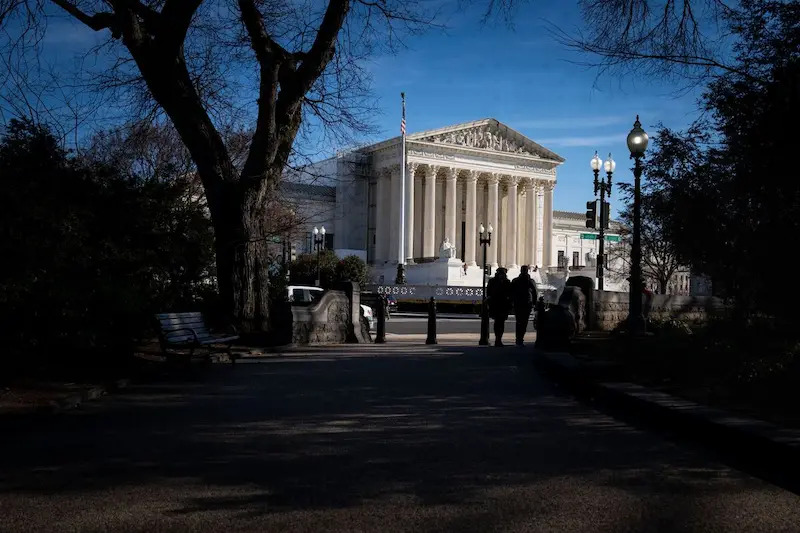


In a significant blow to Apple Inc., the US Supreme Court has rejected the tech giant's appeal in an antitrust suit challenging its lucrative App Store. This decision is expected to have a notable impact on Apple's revenue, potentially amounting to billions of dollars. The court's decision upholds a ruling from 2023 that stated Apple's business model did not violate antitrust laws but did infringe upon California's Unfair Competition Law by limiting developers' ability to inform users about alternative, potentially cheaper, payment systems. As a result, Apple will now be required to allow developers to direct users to cheaper payment options.
Both Apple and Epic Games Inc., the creator of Fortnite, had requested the Supreme Court to review the case. However, the court declined both appeals without providing any explanation. Following the court's announcement, Apple shares initially declined by as much as 2.7%, but later pared back the loss to 1.8%, amounting to $180.93.
This decision by the Supreme Court ends the temporary stay in the case, allowing developers to redirect iPhone users to less costly purchasing options outside of Apple's App Store. Apple currently charges developers a commission of up to 30% for digital goods and services sold through its platform. With the change, developers will have the ability to bypass Apple's system and provide links or buttons to alternative and cheaper options.
Epic CEO Tim Sweeney expressed his satisfaction with the decision, stating, "As of today, developers can begin exercising their court-established right to tell US customers about better prices on the web." Apple has yet to comment on the development.
Billions of dollars are potentially at stake due to this decision. Research firm Sensor Tower predicts that in-app spending will reach $182 billion this year and $207 billion by 2025. Competitors are also poised to seize a share of this market. Microsoft Corp. has already indicated its intentions to launch a mobile app store focused on gaming.
Last year, the 9th US Circuit Court of Appeals largely upheld a lower-court judge's ruling that dismissed Epic's claims that Apple's App Store policies violated federal antitrust law. However, the appeals court did ascertain that Apple's practices violated California law, thus allowing this particular aspect of Epic's case to proceed. The Supreme Court appeals had put these developments on hold.
While this Epic lawsuit was the first to challenge Apple's App Store system, the company has faced increasing pressure globally. In Europe, competition enforcers have two antitrust cases pending against Apple, alleging the misuse of App Store rules to hinder rivals like Spotify Technologies SA. EU authorities are expected to levy fines against the company later this year. In a separate suit, a jury found that Google, belonging to Alphabet Inc., unfairly holds monopoly power in its Android app store. Google has expressed its intention to appeal, but both tech giant app stores can anticipate ongoing scrutiny, including in the form of legislation, investigations, and potential lawsuits.