


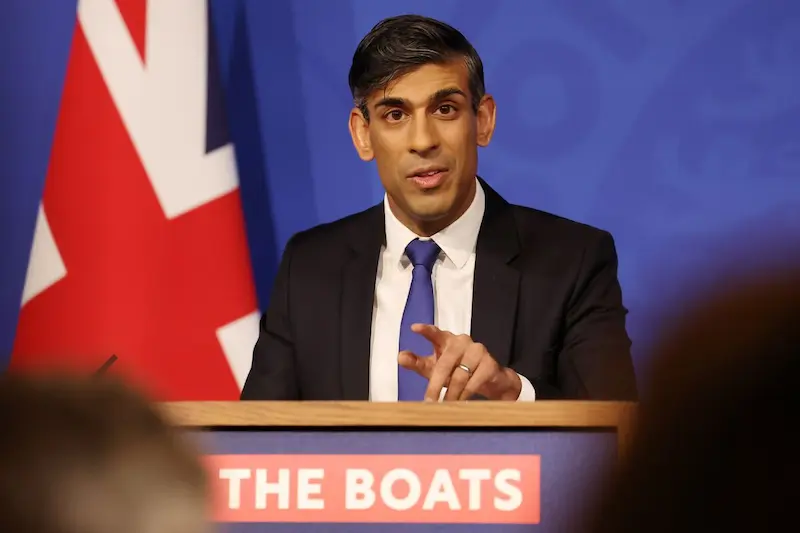


In a significant setback for Rishi Sunak, Lee Anderson, the deputy chairman of the Conservative Party, has resigned from his position. Anderson's resignation comes after the prime minister refused to strengthen his anti-immigration bill, a move that was supported by a faction of Tory MPs, including Anderson. These MPs believe that the proposed law should block asylum-seekers from appealing to British courts before being deported to Rwanda. The issue has become a key concern for the right-wing fringe of the party, who view stricter immigration policies as crucial for their electoral prospects in the upcoming UK general election.
Anderson's resignation is a blow to Prime Minister Sunak as it highlights a lack of confidence within his party regarding the effectiveness of his flagship legislation in halting the arrival of asylum-seekers. This comes just days after Anderson and Sunak appeared together in a Conservative campaign video, highlighting their stance on culture war issues, including immigration. In a joint resignation letter with Brendan Clarke-Smith, another Tory deputy chairman, Anderson expressed their support for amendments to the Rwanda Bill, emphasizing that the current system does not work in favor of the British people.
Anderson and Clarke-Smith, who were elected in 2019 in traditional Labour constituencies that turned Conservative, represent crucial areas that the Tories must retain in order to overcome a 20-point deficit in the polls against the Labour Party in the upcoming election. The prime minister has argued that the Rwanda deportation bill is as tough as international law allows, and any further measures could lead to Rwanda pulling out of the agreement.
Additionally, the rebel Tory MPs have demonstrated their strength in numbers, as indicated by recent votes on amendments put forward by them. These votes revealed that they have the potential to defeat Sunak in the final decisive vote if opposition parties decide to block the legislation, as anticipated. One proposed change by former immigration minister Robert Jenrick, who resigned last month, received the support of 58 MPs. While the government ultimately won the vote, the sheer number of rebel Tory MPs suggests that the final outcome could be in jeopardy for Sunak, especially if combined with opposition party members.
This situation raises concerns about Sunak's ability to manage his party and highlights the persistent divisions within the Conservative Party. The ongoing disagreements may lead to negative media coverage at a critical time and reinforce the perception that a leadership contest is looming within the party. Despite warnings from Sunak's top political strategist regarding party divisions, the rebellious MPs have remained steadfast in their pursuit of tougher immigration policies.
The row over Sunak's deportation plan echoes the Brexit era, with passionate debates and calls for the UK to break international law becoming a matter of ideological purity for right-wing Conservatives. It is widely speculated that these tensions are also part of a political jostle for positioning in an anticipated leadership contest following the general election.
In response to the rebellion, Tory campaign chief Isaac Levido addressed MPs in a closed-door meeting, stating that the rebels seemed to be giving up on the party's goals. Within the ranks of the rebels are notable figures such as former Home Secretary Suella Braverman and Trade Secretary Kemi Badenoch, both considered to have leadership ambitions. Jane Stevenson, the chief parliamentary aide to Badenoch, also resigned on Tuesday to support the rebel amendments.
Beyond the immediate challenges posed by the rebels, Sunak is likely to encounter hurdles in the House of Lords if his Rwanda bill successfully passes the Commons. The strong resistance from within his own party indicates that criticism of the prime minister will persist until deportation flights actually commence. As a result, Sunak faces a difficult path ahead, both in navigating the parliamentary process and managing the increasingly vocal dissent within his party.