


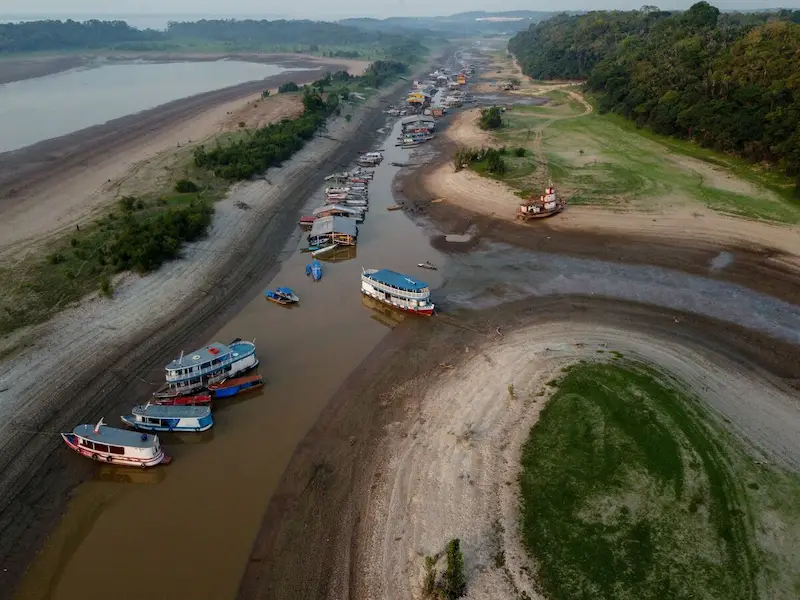


A new study conducted by World Weather Attribution (WWA), a group of international scientists specializing in analyzing extreme weather events, has found that climate change was the main culprit behind the devastating Amazon drought last year. The study examined the drought period from June to November and concluded that it was 30 times more likely to occur as a result of human-induced climate change. While the weather phenomenon El Niño had some influence on lowering rainfall levels, the study highlights that climate change's impact on higher temperatures was the primary driver of the drought.
The Amazon rainforest, spanning across several countries including Brazil, Colombia, and Peru, is not only a biodiversity hotspot but also the world's most critical carbon sink. The rainforest's ability to absorb carbon is under threat due to deforestation and rising temperatures, pushing it into a drier state. The intense drought affected approximately 30 million people who rely on the Amazon River and its tributaries. Crop failure, disrupted waterway transportation, isolation of communities (especially Indigenous and river communities), altered fish migration patterns, wildfires, and the loss of river life were some of the devastating consequences of the drought.
According to the WWA study, without climate change, the drought event would have been less intense, classified as a severe drought rather than an exceptional one. This marks an alarming trend as the Amazon experienced severe droughts in 2005, 2010, 2015, and 2020. With 2°C of warming above pre-industrial levels, the researchers predict that the Amazon could see four times as many agricultural droughts of this magnitude every 10 to 15 years, leading to reduced rainfall, decreased soil water, and reservoir levels.
Regina Rodrigues, a study author and professor of oceanography and climate at Brazil's Federal University of Santa Catarina, warns that the lengthening dry season is a dangerous indicator for the future. The study's lead author, Ben Clarke, emphasizes that we are entering unprecedented territory and will need to redefine existing classification categories for such extreme events.
In response to the growing threat, Simone Athayde, an environmental anthropologist and researcher at the University of Florida, emphasizes the need for better preparedness for future droughts. This includes developing plans to deliver emergency medications in isolated regions, ensuring secure food production, controlling deforestation, and promoting restoration efforts. Athayde also stresses the importance of coordination and collaboration among Amazonian nations to effectively address these issues.
As the Amazon faces the ongoing challenges of climate change and its detrimental effects on the region's ecosystems and communities, urgent action is required to mitigate the impacts and protect this invaluable natural resource.