


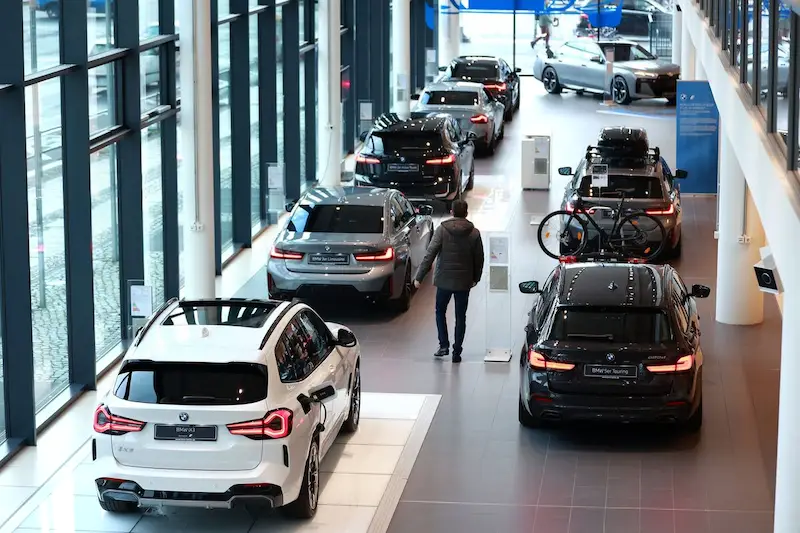


Germany's electric vehicle (EV) market is facing a downturn, with the demand for EVs projected to slump in Europe's largest car market this year. This has vindicated BMW CEO Oliver Zipse, who has long advocated for a more flexible approach that includes combustion, hybrid, and hydrogen-powered cars. While policymakers and manufacturers have focused primarily on battery-powered vehicles, Zipse's cautious strategy seems to have paid off.
The decline in EV adoption can be attributed to several factors. Generous government incentives in Europe are disappearing, and fewer vehicles qualify for incentives in the US. Additionally, despite a price war initiated by Tesla, EVs remain less affordable than their combustion-engine counterparts. Furthermore, infrastructure and price continue to be significant roadblocks to widespread EV adoption, even years into the EV revolution.
In Germany, sales are expected to drop by 14% this year following the withdrawal of government subsidies in December. This will be the first decline since 2016, according to the VDA lobbying group. Globally, market forecasts have also been revised downward due to the affordability issues associated with EVs.
To inject some optimism into the industry, German Transport Minister Volker Wissing emphasized the importance of charging infrastructure. However, the government has fallen short in its efforts to develop the necessary infrastructure. Despite an ambitious plan to invest €6.3 billion ($6.85 billion) in creating one million charging stations by 2030, progress has been slow. There are currently only around 105,000 functional public charging stations in Germany, and at the current rate, triple the effort is needed to achieve the 2030 goal.
The challenge of financing the expansion of charging infrastructure remains unresolved. While policymakers and industry representatives agreed on the importance of charging, they were reluctant to discuss who should bear the financial burden. Rising electricity prices have also dampened demand for EVs.
Another significant hurdle for broader EV adoption is pricing. Germany has set a target of having 15 million EVs on the road by 2030 to meet emissions targets. However, as of November, only 1 million fully electric cars were on German roads, accounting for just 2% of all cars. Achieving the 2030 target without further subsidies appears challenging.
The hesitation in EV adoption is leading drivers to stick with their conventional gasoline-powered cars for longer periods. This, in turn, hampers progress towards lowering emissions in the transport sector. Carmakers are beginning to hedge their bets, with Volkswagen's Audi brand streamlining its EV lineup and VW scaling back plans to sell stakes in its battery unit. A prolonged slump in EV demand could undermine significant industry investments and make it difficult for car manufacturers to comply with new regulations governing emissions reduction.
In conclusion, Germany's EV market is experiencing a slowdown, highlighting the limitations of a sole focus on battery-powered vehicles. The lack of subsidies, inadequate charging infrastructure, and high prices have all contributed to the current state of affairs. As the path to widespread EV adoption becomes longer, drivers are clinging to their conventional cars. This presents both challenges and opportunities for policymakers and car manufacturers as they navigate the complexities of transitioning to a cleaner and more sustainable transport future.