


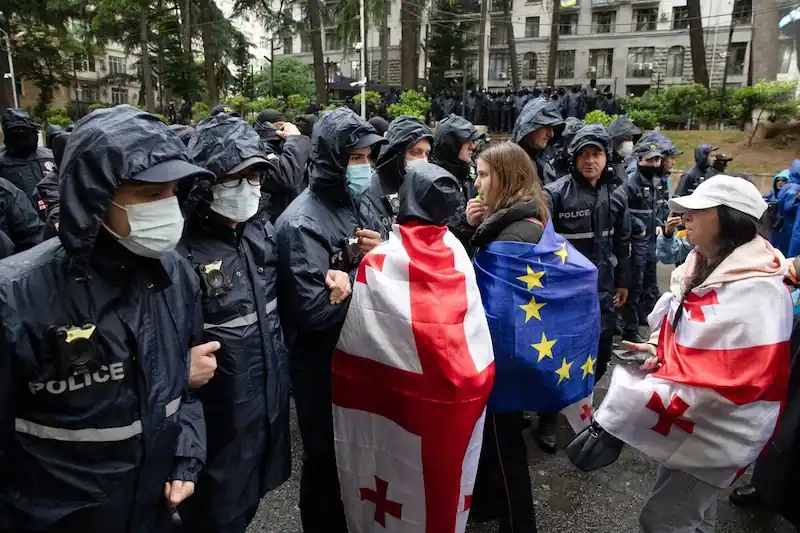


In a move that has sparked outrage both domestically and internationally, Georgian lawmakers have approved a bill targeting foreign influence, known as the "foreign agent" law, despite widespread protests outside the parliament. The ruling Georgian Dream party pushed through the legislation with 84 votes in favor and 30 against, prompting further unrest in the capital city of Tbilisi.
President Salome Zourabichvili has vowed to veto the law, aligning herself with the thousands of protesters who have been demonstrating against the measure for weeks. The opposition United National Movement has labeled the vote as a catalyst for urgent regime change in Georgia, with upcoming elections in October heightening the stakes.
Prime Minister Irakli Kobakhidze has defended the law, arguing that it aims to increase transparency regarding the foreign funding sources of NGOs and media organizations. However, the United States and the European Union have criticized the move, likening it to repressive laws used by Russia to suppress dissent.
US Assistant Secretary of State for European and Eurasian Affairs James O’Brien recently visited Tbilisi to express concerns over the legislation. He warned that if the law is implemented without aligning with EU standards, Georgia's relationship with the US could be at risk. O’Brien also hinted at potential sanctions if there was a crackdown on democracy or violence against protesters.
Despite the ongoing demonstrations and international pressure, the Georgian government seems determined to move forward with the controversial law. Protesters continue to gather outside parliament, facing off against riot police who have used heavy-handed tactics such as tear gas and water cannons. In a show of solidarity, some students and professors have announced plans to strike in response to the legislation.
As Georgia grapples with this divisive issue, the future of the country's relations with key Western allies hangs in the balance, with the specter of further unrest and potential sanctions adding to the uncertainty surrounding the situation.