


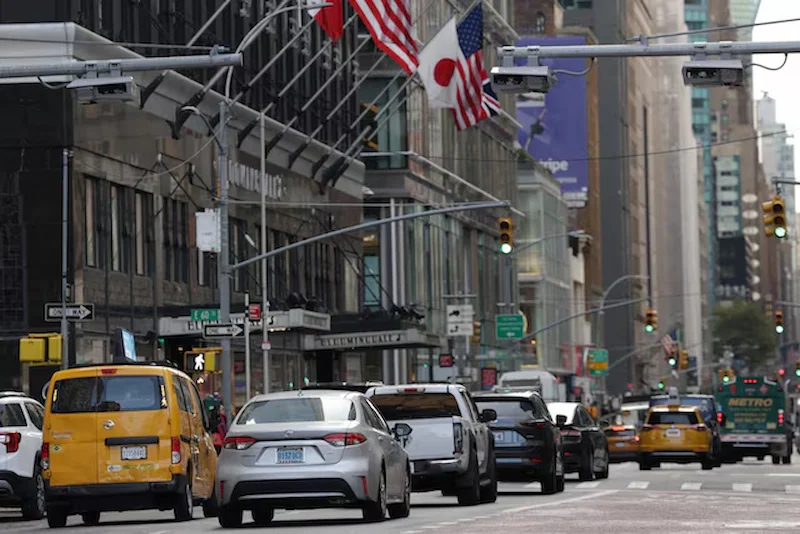


In a landmark decision, the Metropolitan Transportation Authority of New York City has approved a groundbreaking $9 congestion mitigation charge for driving in Manhattan, set to commence on January 5. This innovative move aims to generate billions for mass transit improvements and combat the city's notorious traffic congestion.
Originally proposed by Governor Kathy Hochul, the congestion charge, a first of its kind in the United States, was temporarily shelved in June but has been revived to address New York City's pressing urban challenges. Modeled after London's successful congestion fee implemented in 2003, New York's toll will apply to passenger vehicles traveling below 60th Street in Manhattan during daytime hours.
Despite initial discussions surrounding a $15 charge, the finalized $9 toll is anticipated to significantly reduce the number of vehicles entering the congested zone, with projections suggesting a daily decrease of over 80,000 vehicles. This substantial reduction is expected to alleviate congestion in Manhattan, which is currently identified as the most congested district in the United States.
The implementation of the congestion charge is a critical step towards bolstering investments in New York City's public transportation infrastructure. The toll is projected to secure $15 billion in debt financing for subway and bus enhancements, crucial for sustaining the city's growing transportation needs.
Trucks and buses will face higher tolls, with fees reaching up to $21.60, while nighttime travelers will benefit from a 75% discount. Individual car owners will incur the charge once a day, regardless of the number of trips made, whereas taxis and ride-sharing services like Uber and Lyft will have separate fee structures.
The MTA has emphasized that the congestion charge will not only reduce traffic volume by 17% but also lead to improvements in air quality and a noticeable increase in mass transit ridership. With over 700,000 vehicles entering Manhattan's central business district daily, the toll is seen as a crucial measure to address the city's declining travel speeds and persistent congestion issues.
As New York City gears up for the implementation of the congestion charge, pending final approval from the U.S. Transportation Department and ongoing legal challenges, the city stands poised to usher in a new era of urban transportation management and sustainability.