


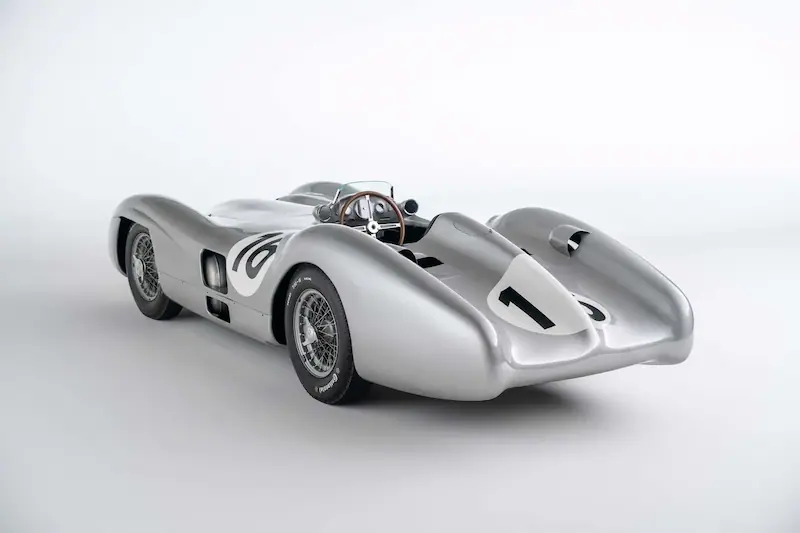


In a historic auction held at the Mercedes-Benz Museum in Stuttgart, Germany, a 1954 Mercedes-Benz W196 R Stromlinienwagen fetched a staggering €46,500,000 ($49,011,000), making it the second-highest sum ever paid for a car at auction. With a 10% buyers premium, the final price surged to a remarkable €51,155,000.
Part of a prestigious three-auction series featuring cars from the renowned Indianapolis Motor Speedway Museum collection, this early Formula One racer in Streamliner body style is a true automotive gem. The auction, organized by RM Sotheby's, saw intense bidding for the iconic vehicle, with collectors from around the world vying for the opportunity to own this piece of racing history.
The W196 R Stormlinienwagen is a legendary car known for its innovative design and outstanding performance. Featuring an inline eight-cylinder engine, this model could race in two distinct body styles: the open-wheel format ideal for cornering and the sleek Streamliner version with covered wheels for high-speed tracks.
With only four of the W196s retaining the Streamliner configuration, the car that was sold, chassis 00009/54, holds a special place in automotive history. Previously driven by illustrious names like Juan Manuel Fangio and Stirling Moss, it boasts a remarkable pedigree and a celebrated racing heritage, making it a coveted addition to any esteemed collection.
While the Stromlinienwagen may not surpass the record-breaking sale of the 1955 Mercedes-Benz 300 SLR Uhlenhaut Coupé, which sold for $142 million, its rarity, historical significance, and association with motorsport legends make it a highly sought-after piece for discerning collectors. Despite its single-seat design, which is less practical for driving, the car's rich history and mechanical integrity make it a prized possession for any automotive enthusiast.
Although the Stromlinienwagen has not been operational since its donation to the Indy Museum in 1965, experts believe it could be restored to running condition with the right expertise and resources. While bringing this historic vehicle back to life may require significant investment and time, its potential to once again hit the track adds an exciting prospect for its future owner.