


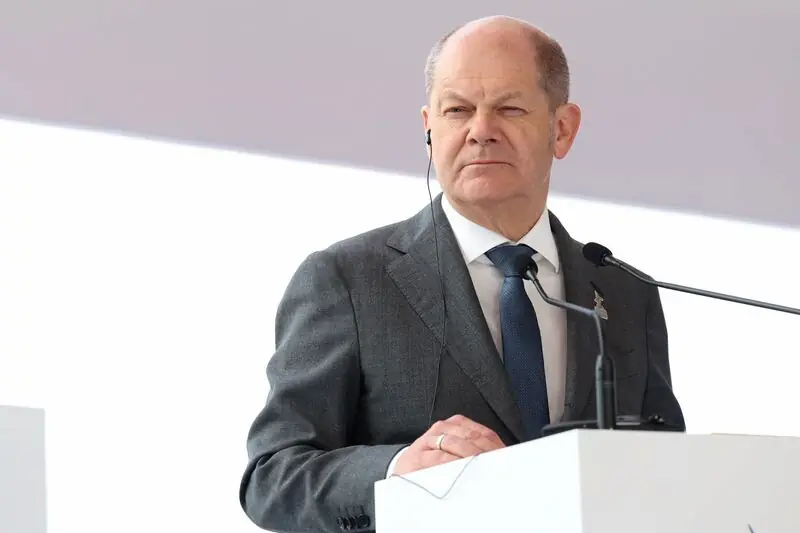


German Finance Minister Olaf Scholz has called on the European Union (EU) to reduce its dependence on China as it increasingly becomes a rival rather than a partner. Speaking to EU lawmakers in Strasbourg on Europe Day, Scholz outlined his vision for a reformed and enlarged bloc that must speak with one voice on issues, including ties with China, if it wants to play a leading global role.
Scholz acknowledged that although China remains Germany's most important trading partner, its rivalry and competition with the EU have increased. He agreed with European Commission President Ursula von der Leyen that the EU should not immediately aim for a decoupling from China but implement a "smart derisking." This would involve the EU reaching out to countries in Africa, Asia, and South America to offer new partnerships and trade deals that create jobs and wealth on the ground, which could reduce economic dependencies on China.
Scholz's speech also touched on the EU's overreliance on Russian fossil fuels, which was exposed during Russia's attack on Ukraine. He emphasized the need to avoid a similar error with China in areas such as technology and raw materials.
The EU's foreign affairs arm, the European External Action Service (EEAS), is working on a new strategy for the bloc towards China, which will be discussed by member states. Scholz also called for an overhaul of EU decision-making, proposing that majority voting should be used for decisions in areas such as foreign policy and taxes, instead of the current requirement for unanimity.
Finally, Scholz emphasized the need for the EU to keep its promises on enlargement, particularly to Western Balkan nations that have been waiting to join for around two decades. In conclusion, his speech highlighted the importance of the EU adopting a unified approach towards China to ensure it can play a leading global role and reduce its dependence on the country.