


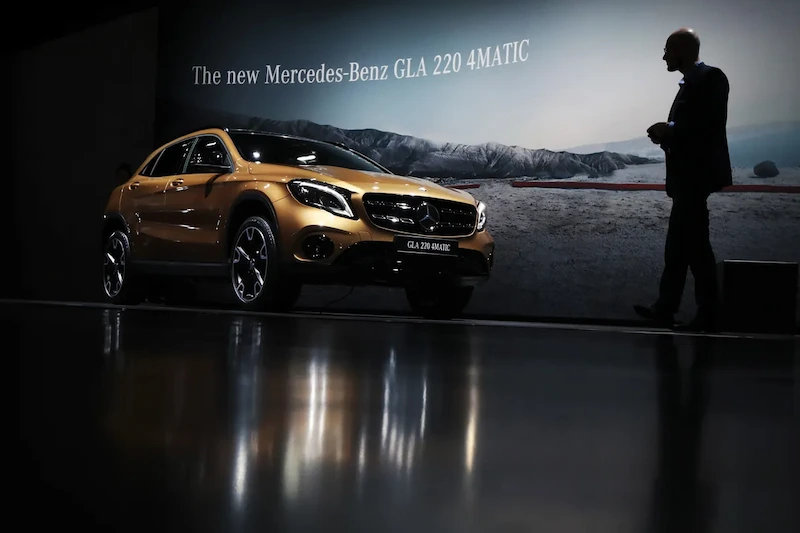


Mercedes-Benz Group AG is pondering the strategic withdrawal of its more affordable vehicles from the US market in response to President Donald Trump's impending auto tariffs. Sources familiar with the matter revealed that the German automaker is contemplating discontinuing sales of entry-level models like the compact GLA SUV as part of a larger plan to mitigate the impact of the 25% tariffs set to come into effect this week.
While no final decision has been made, the uncertainty surrounding the implementation of the tariffs is causing frustration among Mercedes executives. The lack of clear guidance from Washington has left the company unsure of how to proceed. A spokesperson for Mercedes stated that the company's goal is to maximize sales in the US but refrained from providing further details.
The escalating trade war has ushered in challenges for automakers, with companies like Aston Martin Lagonda Global Holdings Plc and Ferrari NV planning price hikes for some of their vehicles in the US. Meanwhile, Volkswagen AG is weighing the possibility of expanding its local manufacturing operations to counter the impact of tariffs. Stellantis NV's Chairman John Elkann recently met with Trump, and the Chrysler parent company, along with other automakers, is making efforts to influence the administration's decision.
By reducing its exposure to the entry-level premium market, Mercedes seeks to evade tariffs on its less profitable models. The imposition of tariffs on models like the GLA, which has a starting price of around $43,000 in the US, could erase already slim profit margins if not passed on to customers. This strategic shift may also lead consumers to opt for higher-end models, boosting sales of more premium vehicles in the US market where demand for larger SUVs remains strong.
Under the leadership of CEO Ola Källenius, Mercedes has been focusing on strengthening its presence in the luxury segment by concentrating on high-end models like the S-Class sedan. The company has reevaluated its commitment to producing only electric vehicles and has reaffirmed its investment in combustion-engine vehicles following a decline in EV demand. Mercedes had previously warned of lower profit margins due to intense competition, trade tensions, and changing consumer preferences.
According to Bloomberg Intelligence, Mercedes and Porsche AG are expected to bear the brunt of the new US tariffs, potentially facing a €3.4 billion ($3.7 billion) impact. Mercedes' shares have also experienced a significant decline over the past year. The unpredictable nature of Trump's trade policies has created uncertainty and challenges for automakers, hampering their ability to make informed strategic decisions. Andrew Bergbaum, Managing Director at AlixPartners, emphasized the complexity of the situation, stating that the lack of clarity regarding the specifics of the tariffs makes it exceedingly difficult for companies to plan for the future.