




After weeks of negotiations and public finger-pointing, Congress has finally passed a legislation to suspend the US debt ceiling, averting a global financial crisis. The deal was forged by President Joe Biden and House Speaker Kevin McCarthy, and it imposes restraints on government spending through to the 2024 election.
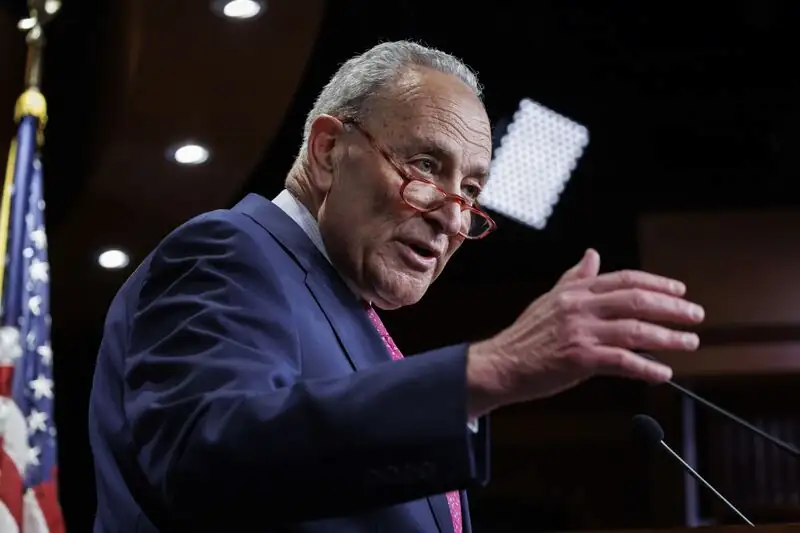
Moderates from both parties carried the 63-36 vote on the bill, even though many of them aired their misgivings about some parts of the deal. They were ultimately convinced that the concerns weren't worth risking the devastation that could result from a US default. "If we do this, we will not default," Senate Majority Leader Chuck Schumer said just before the vote. "That is very, very important."
Investors have mostly viewed the risk of a US default as resolved, shifting their attention to other uncertainties, such as the Federal Reserve policy. Futures on the S&P 500 and Nasdaq 100 edged higher. Meanwhile, the dollar extended its decline from Thursday, and Treasuries slipped across the curve.
The legislation was hard-fought and took weeks of private talks to reach a compromise. It is an anomaly in Washington's highly polarized environment, where dealmaking is becoming a lost art form. The process of getting the bill through the Senate took hours of negotiations between the two parties. Independent Senator Kyrsten Sinema even shuttled designer sneakers between Republicans lunching on the second floor of the Capitol and Democrats both on and off the Senate floor.
In the end, they settled on allowing unusually speedy votes on 11 amendments, all of which failed, and a couple of statements from Schumer to assuage concerns about defense spending levels and other potential cuts. Schumer made it clear that the Senate could bypass the spending caps in the bill for Ukraine, defense, and domestic priorities using emergency funding, although the Republican-controlled House would have to concur.
Passing the bill through the Senate ends the worst standoff over US debt in more than a decade. However, it comes at a political cost for both Biden and McCarthy, who have faced criticism from lawmakers on their respective parties' flanks, who believe that too much was given away in the negotiations.
The ultra-conservative House Freedom Caucus has intensified its criticism of McCarthy after more Democrats voted for the bill in the House than Republicans. The caucus will meet next week to discuss their next steps, which could mean seeking to oust McCarthy. For Biden, the vote risks alienating well-known progressives ahead of his re-election campaign, where he will rely on them to increase enthusiasm and campaign for him among critical constituencies.
But the President is not facing a serious challenge from the left, and the deal avoids an economic upheaval as he seeks re-election. It also strengthens his reputation for pragmatism and working across party lines.
The bill would set the federal spending course for the next two years and put a hold on the debt ceiling until Jan. 1, 2025, postponing another clash over borrowing until after the presidential election. In exchange for Republican votes for the suspension, Democrats agreed to cap federal spending for the next two years. The bill also gives the green light to Equitrans Midstream's stalled Mountain Valley Pipeline in West Virginia.
The spending restraints in the deal may have a significant impact on young college graduates who will have to resume student loan payments and some lower-income Americans hit with benefit restrictions or service cuts.