


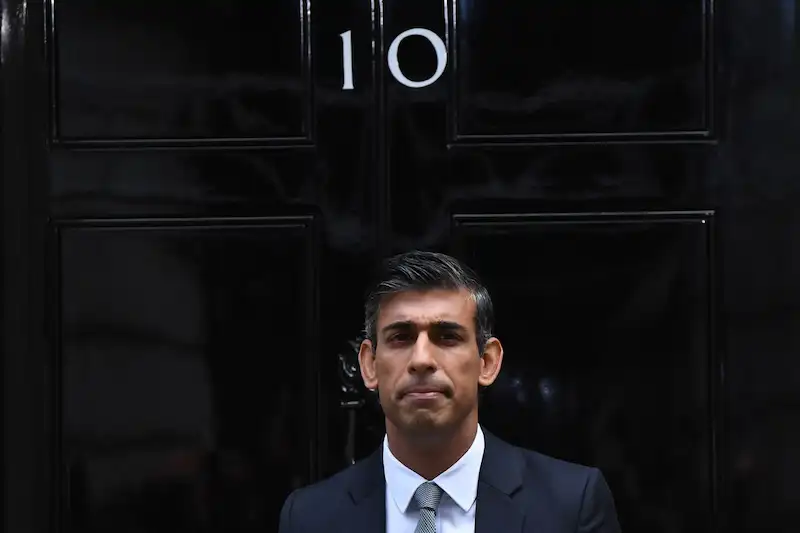


British Prime Minister Rishi Sunak is facing a challenging economic climate as he prepares for a potential general election in 2024. While the Bank of England predicts that Sunak has a good chance of halving UK inflation this year, other economic indicators paint a less favorable picture. The bank warns that borrowing costs could remain elevated well into next year, potentially leaving households still feeling the effects of 14 consecutive interest-rate increases. If this scenario plays out, it will be difficult for Sunak to convince voters that they are better off than they were in 2010, a key question in retaining public trust.
One positive development for Sunak is that inflation is expected to decrease to 4.9% in the fourth quarter compared to 10.7% a year earlier, meeting his target of halving inflation by the end of 2023. However, after enduring double-digit inflation for an extended period, the reduction in price rises might not provide much relief for Britons who have experienced a prolonged cost-of-living squeeze.
Although consumers have shown resilience despite the inflation shock, the Bank of England only narrowly predicts that the UK will avoid a recession. The economy is expected to fully recover its pre-pandemic size in the current quarter but is projected to expand in only one quarter next year. This low-growth environment is far from ideal for Sunak if he chooses to hold a general election in November. Knocking on doors during winter, with a sluggish economy dampening public sentiment, is unlikely to be welcomed by Tory activists. Chancellor Jeremy Hunt plans to use a fiscal statement this autumn to spur growth and improve the economic outlook.
The Bank of England's message regarding interest rates is that they may stay elevated for longer than initially expected. While borrowing costs may soon reach their peak, the battle against inflation is ongoing. Governor Andrew Bailey emphasizes that policy must remain restrictive to bring inflation down, which means little relief for homeowners with mortgages. Many will face a significant shock as they are forced to refinance at higher rates. Money markets are even anticipating a raise in rates to a 16-year high of 5.75% by November, with no expectation of a cut until the following year.
While a strong labor market, falling energy prices, and extended government support for utility bills have supported after-tax incomes, the Bank of England's forecasts suggest a stagnation in living standards over the next two years. The labor market, which had been thriving, is showing signs of cooling, with the bank predicting an increase in the unemployment rate to 4.5% by the end of 2024. This means that an additional 200,000 people will be seeking employment during the election period. Furthermore, unemployment is expected to rise further in 2025 and potentially reach 5% in 2026, leaving no immediate signs of improvement on the horizon.
In summary, Rishi Sunak faces a challenging economic landscape as he looks ahead to a potential general election. While he may achieve his goal of reducing inflation, other key economic indicators such as low growth, elevated interest rates, and stagnating living standards pose significant challenges. Sunak will have to overcome these obstacles and convince voters that he can turn the economy around if he hopes to secure victory in the election.