


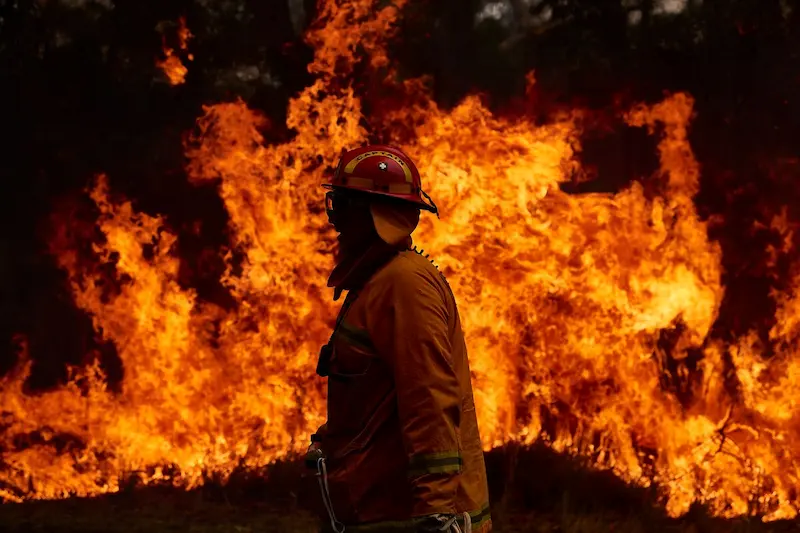


The Australian government is sounding the alarm as the cost of disaster management continues to skyrocket. Treasurer Jim Chalmers revealed that funding for disaster recovery has surged by a staggering 433% over the past three years, amounting to AUD 2.5 billion ($1.6 billion) for the year ended June 30. In excerpts from a speech to be delivered in Rockhampton, Chalmers expressed concerns about the constant and cumulative impact of a changing climate and the increasing frequency of natural disasters in Australia.
Recent years have seen Australia hit hard by devastating natural disasters including the Black Summer bushfires in 2019-2020 and widespread flooding in 2021 and 2022. Now, with the threat of an impending wildfire season exacerbated by the El Nino weather system, authorities are raising the alarm about the growing risk of severe bushfires. High temperatures and low rainfall are predicted as a result of this weather system over the Pacific Ocean.
Australia, a country at the forefront of climate change impacts, has faced criticism for lagging behind in addressing the risk, particularly during the previous center-right government's reign from 2013 to May 2021. Despite being one of the highest carbon emitters per capita and a major exporter of coal, the nation is making efforts to prepare better for future disasters. Emergency Management Minister Murray Watt recently stated that Australia is more equipped and resilient for the upcoming bushfire season compared to 2019, as government funding for aerial firefighting has doubled since then.
However, Treasurer Chalmers will argue that the economic damage caused by climate change is only just beginning to be understood. The Black Summer bushfires and the October 2022 floods each cost the Australian economy around AUD 1.5 billion. Chalmers warns that if further action isn't taken to address climate change, Australian crop yields could be reduced by 4% by 2063, resulting in a GDP loss of approximately AUD 1.8 billion in today's dollars.
These figures highlight the urgency with which Australia must address the impacts of climate change and invest in disaster preparedness and mitigation. Failure to take appropriate action could lead to further devastating natural disasters and significant economic consequences.