


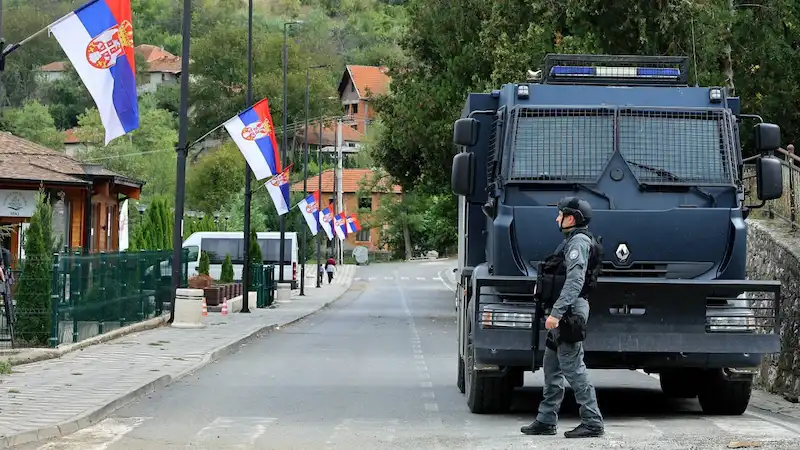


The long-standing tensions between Kosovo and Serbia have once again reached a critical point following a recent outbreak of violence. The trigger for this latest flare-up was the killing of a Kosovar police officer, which led to a shootout at a monastery. However, the root causes of these tensions can be traced back to the 1990s and the disintegration of the former Yugoslavia.
In 2008, Kosovo declared independence from Serbia after a war in which Kosovar Albanians sought to break away from the Federal Republic of Yugoslavia. This war was the culmination of decades of ethnic tensions between the Albanian and Serb communities in the region. During the conflict, NATO intervened to protect Kosovo's Albanian majority.
Since then, a fragile peace has been maintained in Kosovo, while Serbia still refuses to recognize the country's independence. Kosovo's Serb minority, who make up less than one-tenth of the population, consider themselves part of Serbia and see Belgrade as their capital rather than Pristina.
The majority of Kosovo's Serbs reside in the northern regions, where demands for greater autonomy from the ethnic Albanian majority have been increasing. Disputes over the level of autonomy for the Serb minority continue, with some members of the community responding with violent resistance to what they perceive as anti-Serb actions by Pristina.
The recent escalation of violence occurred when around 30 heavily armed Serbian men clashed with the police, resulting in the death of a Kosovo police officer and the injury of another. The subsequent shootout took place in the predominantly Serbian village of Banjska, near a Serbian Orthodox monastery. The Kosovo police claimed to have killed three attackers and arrested another, uncovering military equipment and weapons at a location associated with the assailants.
Kosovo's President, Vjosa Osmani, blamed Belgrade for inciting the violence, while Serbian President Aleksandar Vucic denied the allegations, stating that Serbia has no interest in jeopardizing its position in EU-sponsored normalization talks with Pristina. However, Vucic criticized Kosovar police for shooting one of the gunmen in the head after he had surrendered, describing it as an "execution." He promised to investigate the events and the origins of the seized weapons.
The international community has expressed concern over the situation. The White House warned that the incident poses a threat not only to Kosovo personnel but also to international personnel, including NATO troops. The US is closely monitoring a significant Serbian military deployment along the border with Kosovo and is urging Serbia to withdraw those forces and contribute to lowering tensions.
NATO Secretary General Jens Stoltenberg authorized additional forces for Kosovo in response to the deadly shootout and similarly called for de-escalation. The situation remains volatile, and the international community is closely following developments, urging all parties to engage in dialogue and find a peaceful resolution to the tensions.