


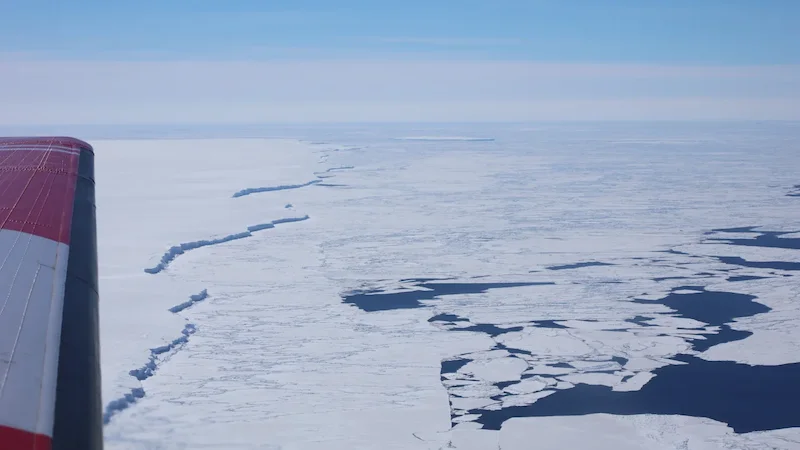


Glaciers in East Antarctica could be losing ice at a faster rate than previously estimated, leading to alarming consequences. In a concerning feedback loop, the meltwater from these glaciers is triggering even more ice loss and contributing to rising sea levels as the planet continues to warm. This disquieting discovery comes on the heels of reports that the rapid melting of West Antarctica's ice shelves may be unavoidable due to human-induced global warming. Combined, these recent studies paint a dire picture of Antarctica as a melting continent, posing an extreme risk of significant sea level rise worldwide.
Published in the journal Science Advances, a study conducted by scientists from the University of California at San Diego's Scripps Institution of Oceanography focused on the Denman and Scott glaciers in East Antarctica. These glaciers alone hold enough ice to cause a sea level rise of approximately five feet. While earlier studies have highlighted the process of meltwater flowing beneath glaciers and into the sea, which accelerates ice loss, this study factored in this feedback mechanism to understand the potential acceleration of Antarctic melting and subsequent sea level rise.
The research revealed that if the world continues burning fossil fuels at an accelerated rate, the Denman and Scott glaciers could retreat past a critical threshold nearly 25 years earlier than anticipated. Incorporating the meltwater feedback into simulations, the scientists found that the additional ice loss – caused by the discharge of meltwater – could increase the sea level rise from these glaciers by nearly 16% by the end of the year 2300.
What makes this study especially significant is the realization that current climate models do not consider the impact of meltwater discharge on global sea level rise. Yet, this phenomenon could be a significant driver of ice loss across the entire continent. Lead author Tyler Pelle emphasized the urgency of monitoring East Antarctica, as its increasing instability heightens the risk of sea level rise for coastal communities and low-lying island nations. This instability challenges previous assumptions about the stability of these enormous ice masses, making it crucial for scientists to pay attention to this remote part of the world.
The implications of this research are clear: people's lives are at stake. Although the devastating impacts of melting glaciers may not be experienced by current generations, the actions taken today determine the fate of future ones. Pelle stresses the importance of considering the long-term consequences, as the emissions released now will influence the climate for generations to come. The researchers make a persuasive argument for including subglacial discharge in all simulations of Antarctic ice loss, as it can no longer be ignored when projecting the region's contribution to sea level rise.
While this study focused on a present-day simulation, with conservative results, the researchers plan to venture into the field to further analyze the depths of the ice sheet and the ocean. Obtaining a comprehensive understanding of the future is crucial, particularly given that the least-explored part of Antarctica holds the key to observing and monitoring these changes. The researchers emphasize the urgency and significance of this undertaking in order to address the pressing challenges posed by melting glaciers and rising sea levels.