


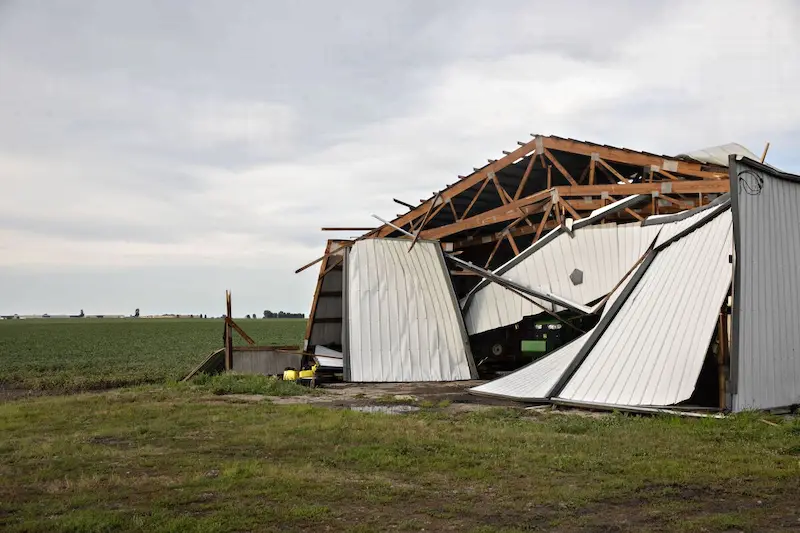


The central United States is experiencing an alarming increase in damaging winds from thunderstorms, which are occurring five times more frequently than they were four decades ago. These findings, revealed by the National Center for Atmospheric Research (NCAR), point to the detrimental impact of climate change on local economies, posing significant threats to various sectors. The study, utilizing computer modeling, highlights the rise in non-tornadic gusts such as straight-line winds and derechos, which are swiftly moving lines of thunderstorms that can traverse great distances.
Andreas Prein, scientist at the atmospheric research center and author of the study, explained during a telephone interview that these powerful wind events can have devastating consequences on power grids, crops, individuals, livestock, and buildings. Recent years have witnessed the destructive prowess of these strong winds, with a powerful derecho in 2020 causing approximately $11 billion in damages across the Midwest. Furthermore, in 2022, tree-toppling gusts damaged structures and power lines. Earlier this year, hurricane-strength winds led to power outages in Oklahoma.
The study's findings, published in the journal Nature Climate Change, underscore the urgent need to integrate the increasing risk of straight-line winds when planning for the impacts of climate change. By doing so, infrastructure can be developed with enhanced resilience to combat this often neglected peril. The research utilizes data from 1980 to 2022 to analyze the trend closely.
Prein's team, which collaborated with the US Geological Survey, employed a grid-spacing model of 2.5 miles (4 kilometers) to effectively capture the intensification of wind phenomena. This grid size aligns with the range used in operational weather models, enabling the team to include thunderstorm winds that would have been overlooked using the standard 60-mile spacing traditionally employed by the Intergovernmental Panel on Climate Change. Prein acknowledged that this approach requires substantial investment and labor efforts, but it proved critical in effectively monitoring and analyzing the increasing wind activity.
The study also attributes the rise in wind frequency to the fact that the atmosphere can hold more moisture in a warming world. Consequently, this increased moisture content leads not only to stronger winds but also to gusts from down drafts. Prein and his team plan to extend their model into the mid-2060s to gain further insights into the potential future scenarios for these destructive storms.
These alarming findings serve as a stark reminder of the urgent need to address climate change and its profound impacts. By understanding the changes in weather patterns and the increased frequency of damaging winds, it becomes crucial for stakeholders to implement adaptive measures and invest in resilient infrastructure. Failure to do so could lead to far-reaching consequences for local economies and the well-being of communities in the central US and beyond.