


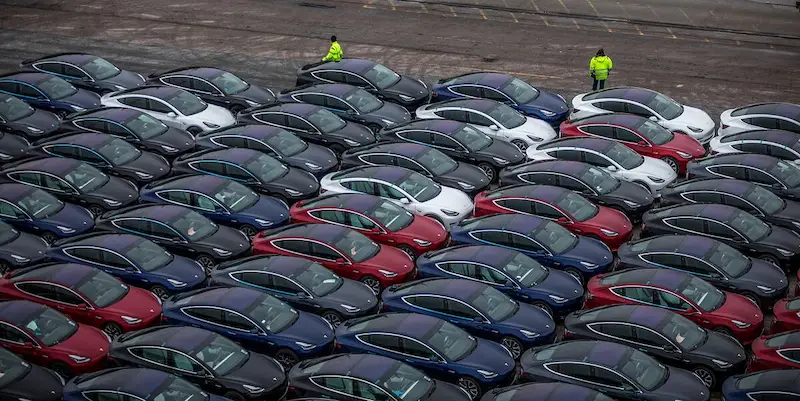


India is reportedly considering tax cuts on imports of fully assembled electric vehicles (EVs) for a duration of up to five years. The aim of this move is to entice global automobile giants such as Tesla to sell and eventually manufacture their electric cars within the country.
Sources familiar with the matter have revealed that the Indian government is in the process of formulating an electric vehicle policy. Under this policy, international car manufacturers would be able to import EVs at discounted duty rates. However, there would be a requirement for these companies to commit to eventually producing electric vehicles in India.
Although a final decision on the policy's details is yet to be reached, the move signifies India's intention to attract investment from major EV manufacturers. The heavy industries and commerce ministries of India have so far refrained from commenting on the matter.
Tesla, the Texas-based electric vehicle manufacturer, had previously sought duty cuts on imported electric vehicles in 2021. Tesla's request was to reduce the current duty rates of 70% to 100% to a lower range of 40%. The company is expected to hold discussions with Indian Trade Minister Piyush Goyal in the coming week regarding its plans to establish a manufacturing facility in India. Minister Goyal is presently in San Francisco to participate in ministerial engagements related to the Indo-Pacific Economic Framework and the Asia-Pacific Economic Cooperation.
Tesla's potential entry into India holds promise for one of the world's fastest-growing automobile markets, where demand for electric vehicles is steadily rising, particularly among the middle class. Moreover, Tesla's investment would align with the Indian government's goal to enhance the manufacturing sector's contribution to the nation's GDP and generate employment opportunities.
The Indian electric car market is still in its nascent stage, with EVs comprising only 1.3% of total passenger vehicles sold in the country last year, according to BloombergNEF. The adoption of electric vehicles in India has been hindered by several factors, including high costs, limited options, and inadequate charging infrastructure.
Initiating measures to open up the EV segment could significantly accelerate the adoption of cleaner transportation in a country that currently has the most polluted air in the world. In 2021, the Indian government introduced a $3.1 billion incentive program to boost local EV production. Now, by considering tax cuts on EV imports, India aims to attract global players like Tesla and further bolster its electric vehicle ecosystem.