


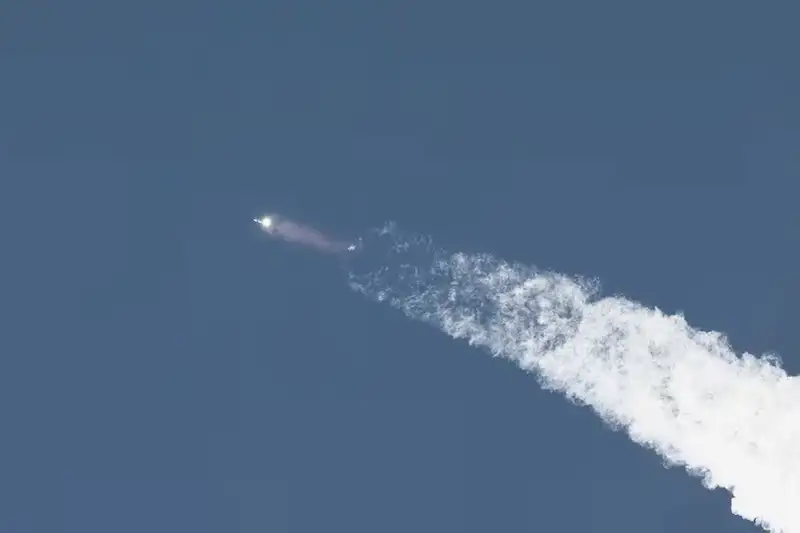


In a setback for Elon Musk's SpaceX, the uncrewed Starship spacecraft failed during its second test launch on Saturday, despite making it further than its previous explosive attempt. The rocketship lifted off from the Starbase launch site near Boca Chica, Texas, aiming to reach an altitude of 90 miles (148 km) for a 90-minute test mission to space and back.
While the Super Heavy first stage booster successfully separated from the core Starship stage, it unfortunately exploded over the Gulf of Mexico shortly after detachment. The core Starship stage continued its ascent towards space, but mission control suddenly lost contact a few minutes later, leaving engineers puzzled about the cause.
According to SpaceX engineer and livestream host John Insprucker, it is believed that an automated flight termination command was triggered, leading to the rocket's destruction, though the reason for this action remains unclear. Approximately eight minutes into the test, an explosion occurred, indicating a failure in the Starship booster at an altitude of 91 miles (148 km).
The U.S. Federal Aviation Administration (FAA), responsible for overseeing commercial launches, confirmed the mishap and stated there were no injuries or property damage. The FAA will now oversee a SpaceX-led investigation into the incident and determine preventive measures for future tests. SpaceX has previously expressed frustration over the lengthy regulatory review process.
This test failure represents a setback for SpaceX, which has plans to invest roughly $2 billion in the Starship program this year. However, the company's risk-tolerant culture prioritizes rapid testing and iteration to accelerate design and engineering improvements. While this test did not meet all objectives, SpaceX accomplished some significant milestones, according to Carissa Christensen, CEO of space analytics firm BryceTech.
SpaceX's Starship plays a crucial role in NASA's Artemis program, where the space agency aims to return humans to the moon within the next few years. NASA, SpaceX's primary customer, considers Starship instrumental in achieving this goal. NASA Chief Bill Nelson characterized the failed test as an opportunity to learn and improve for future flights. The success of Starship is essential to keeping up with NASA's timeline.
Elon Musk envisions Starship eventually replacing SpaceX's Falcon 9 rocket and becoming the centerpiece of the company's launch business. This fully reusable spacecraft could facilitate missions to the moon, Mars, and beyond. While SpaceX faces scrutiny over worker safety following a recent Reuters investigation, the company remains committed to its ambitious goals.
Despite this setback, industry observers, like Jaret Matthews, CEO of lunar rover startup Astrolab, expect SpaceX to swiftly resume testing. Matthews, who toured SpaceX's Starbase facilities, believes that the company is well-prepared to continue its test program. However, the pace of future tests will depend on FAA review and the extent of the technical challenges encountered.
As SpaceX works towards resolving these issues, the clock is ticking for the company to deliver on its promises. NASA's timeline relies heavily on Starship's success in order to meet its ambitious plans of crewed lunar landings. While setbacks are common in the aerospace industry, SpaceX's ability to overcome challenges and iterate quickly will be critical in fulfilling its role as a key player in space exploration.