


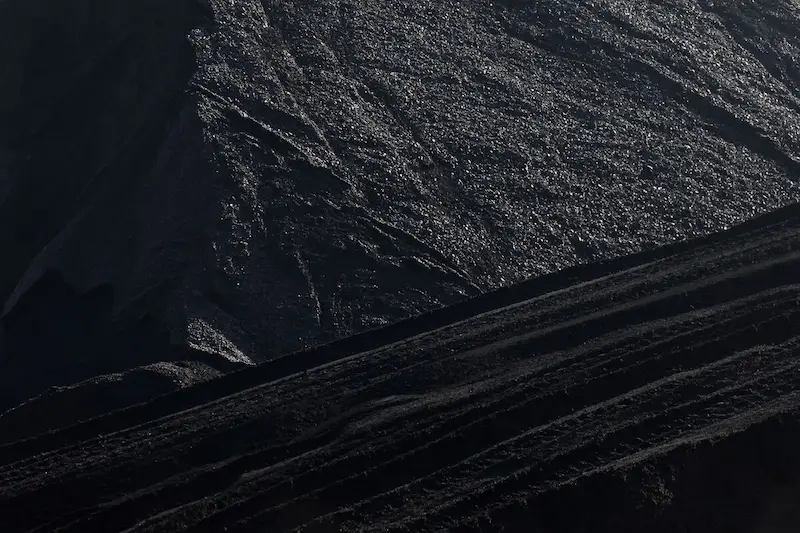


In a significant move to combat climate change, Japan has made a commitment to cease the construction of new unabated coal-fired power plants within its borders. Prime Minister Fumio Kishida announced this pledge during his address at the COP28 summit, emphasizing Japan's transition towards achieving net-zero emissions. The decision aligns with international efforts to reduce greenhouse gas emissions, particularly from the largest source – coal-fired power generation.
Coal currently accounts for nearly one-third of electricity production in Japan. The nation's reliance on fossil fuels increased significantly after the 2011 Fukushima disaster led to the shutdown of a substantial portion of its nuclear capacity. However, the latest commitment does not impact coal plants already under construction. Two coal plants commenced operations this year, with another near Tokyo scheduled for commissioning in February. Typically, coal plants have a lifespan of 30 to 50 years.
Japanese authorities confirmed that no plans for new coal power plants are currently underway. Nonetheless, Prime Minister Kishida's commitment leaves room for the possibility of future plants integrated with emission reduction technologies, such as carbon capture and storage. This indicates that Japan intends to explore cleaner alternatives to unabated coal power in its pursuit of a stable energy supply.
This announcement from Japan follows the lead of nations like the UK and Canada, who recently urged participants at the UN climate conference in Dubai to put an immediate end to new unabated coal-fired power projects. It also resonates with the G-20 members' agreement to triple renewable energy capacity by 2030 and foster the development of emission reduction and removal technologies.
Japan, previously a significant contributor to the financing and construction of coal power plants overseas, joined other G-7 countries last year in discontinuing international funding for such projects. The nation subsequently withdrew from coal-related ventures in Bangladesh and Indonesia. Furthermore, Japanese companies like Sumitomo Corp. and Toshiba Corp. have already stated their refusal to take on new orders for coal-fired projects, while certain commercial banks have made similar commitments.
Despite these progressive efforts, Japan's current trajectory for reducing greenhouse gas emissions is not consistent with global aspirations to limit global warming to 1.5°C, as per data compiled by Bloomberg. Prime Minister Kishida did not explicitly address plans to reduce the country's dependence on crude oil and natural gas – both of which Japan is one of the world's largest importers. However, he did highlight that Japan remains committed to achieving its goal of reducing emissions by 46% by 2030, with further aspirations to reach a 50% reduction.
As part of its ongoing efforts, Japan is actively promoting co-firing at power plants, a technique that involves substituting a small portion of coal or gas with alternative fuels like ammonia to reduce emissions. Nevertheless, critics argue that co-firing is costly and offers limited pollution reduction benefits. Despite this criticism, Japan continues to explore innovative solutions to transition its energy sector towards cleaner alternatives.
Japan's commitment to halt the construction of new unabated coal power plants represents a significant step towards achieving global climate goals. The nation's decision sends a strong message of intent and complements the international momentum towards transitioning to renewable energy sources. By prioritizing a stable energy supply while aiming for net-zero emissions, Japan takes a bold stride in addressing the urgent issue of climate change.