


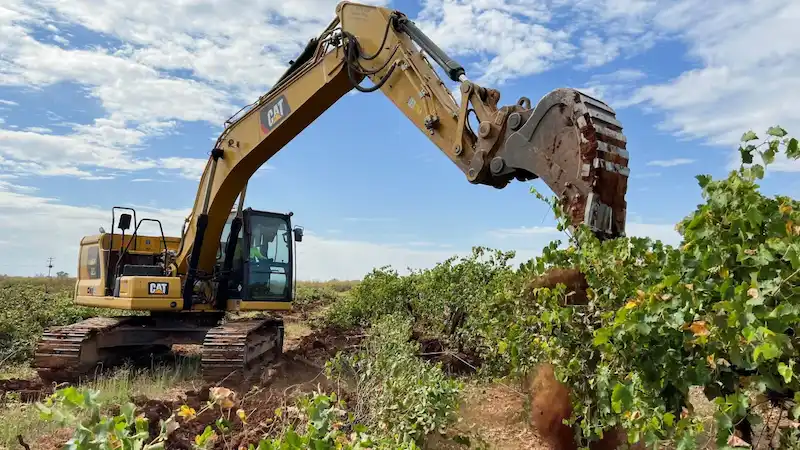


In Australia, a crisis looms over the wine industry as millions of vines are being ripped from the ground to combat a massive oversupply that has driven grape prices to rock bottom. The country, known as the world's fifth-largest exporter of wine, is facing a dire situation as consumption of wine declines globally, hitting particularly hard on the cheaper red wines that Australia predominantly produces. This drop in demand has severely impacted Australian wine growers, especially those in regions like Griffith, where unpicked grapes now hang shriveled on dying vines.
As the landscape in wine-growing regions such as Griffith is reshaped by the removal of vines, the livelihoods of generations of vineyard owners hang in the balance. With major wine companies shifting focus to more premium offerings, leaving behind the bulk production of red wines, vineyard owners like James Cremasco and Andrew Calabria are left with no choice but to watch as their once-prosperous vineyards are torn up.
The red wine segment has been hit the hardest, with prices plummeting to historic lows. Last year, prices for red wine grapes in regions like Griffith averaged just A$304 a ton, a significant drop from A$659 in 2020. This drastic decrease in grape prices has pushed many growers to the brink of financial ruin, with some selling their produce for as little as A$100 a ton. Despite government assurances of support, growers are demanding more concrete actions to address the crisis that threatens their livelihoods.
To bring the market back into balance and raise prices, experts suggest that up to a quarter of the vines in oversupplied regions like Griffith need to be uprooted. This would mean the destruction of over 20 million vines across 12,000 hectares, representing approximately 8% of Australia's total vineyard area. The process of vine removal is not limited to Griffith, as growers in various regions across the country are also facing the tough decision of pulling out vines to survive the crisis.
With consumers worldwide shifting towards higher-quality wines and reducing alcohol consumption, the oversupply issue is further compounded. The loss of the Chinese market, Australia's largest export destination by value, has only added to the industry's woes. Despite the expected reopening of the Chinese market, the excess supply remains a pressing concern as demand continues to falter. In a bid to clear out excess wine, wineries are resorting to selling at rock-bottom prices, with some even giving it away to make space for incoming vintages.
In response to the crisis, many growers are diversifying their crops, turning to alternatives like citrus and nut trees. While some regions, such as Tasmania and the Yarra Valley, are faring better with their production of higher-end wines, areas like Griffith are grappling with the harsh reality of uprooted vines and surplus wine. As vineyards make way for new ventures like almond plantations and prune trees, the traditional landscape of Australian viticulture is undergoing a profound transformation. Despite the challenges, the resilience of these growers shines through as they adapt to a changing market landscape, hoping for a brighter future amidst the upheaval in the wine industry.