


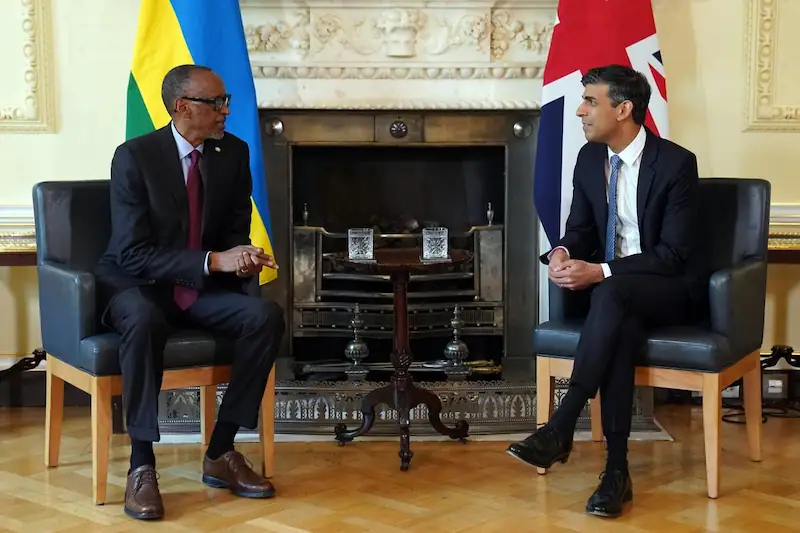


Facing a growing influx of asylum-seekers, the United Kingdom has devised a contentious solution to the pressing migration issue: Send migrants to Africa. Originally proposed by former Prime Minister Boris Johnson in April 2022, the plan aimed to swiftly deport unauthorized arrivals to Rwanda, located approximately 4,000 miles away. However, despite two years passing since its introduction, the UK has encountered numerous legal setbacks and is yet to carry out a single deportation to the central African nation. Current Prime Minister Rishi Sunak has made the success of this plan a critical focus of his political career.
The rising number of asylum-seekers entering the UK has become a significant concern, mirroring a broader trend across Europe. In 2023, approximately 30,000 individuals crossed the English Channel in perilous small boats, marking a 36% decrease from the previous year. Despite this decline, the figures have surged again this year, with a record number of migrants arriving in the UK during the first quarter. The majority of these individuals hail from countries such as Iran, Syria, Albania, Iraq, and Afghanistan. While nearly 90% ultimately secure asylum through established legal frameworks, the escalating numbers have heightened public unease and political pressure.
The migration crisis has elevated public anxiety around immigration and asylum in the UK, despite asylum-seekers constituting a small fraction of overall new arrivals. The Conservative Party, led by Sunak, pledged to reduce net migration but saw numbers soar to a record high of 745,000 in 2022, primarily driven by non-EU immigrants using legal routes. Approximately a third of Britons perceive immigration and asylum as one of the nation's top concerns, trailing behind issues such as the cost of living, the economy, and healthcare. Sunak's government faces challenges from right-wing factions like the Reform UK party, backed by Nigel Farage, advocating for stricter immigration controls.
The UK's agreement with Rwanda involves sending asylum-seekers to the African nation for case processing, with no guarantee of return even if their claims are approved. Rwanda, under President Paul Kagame's leadership, sees this agreement as an opportunity to showcase its post-conflict reconstruction and effective governance to the international community. While Rwanda's acceptance of migrants aligns with its desire for global recognition, the exclusivity of this partnership signifies the lack of alternative host countries willing to participate in the UK's deportation scheme.
Despite the initial plan to relocate a modest number of migrants to Rwanda, the UK anticipates a gradual increase in this figure over time. The primary objective remains deterrence; by demonstrating a willingness to deport asylum-seekers to Africa, the UK aims to dissuade potential migrants from attempting the perilous journey across the English Channel. However, critics argue that leveraging Rwanda's historical context of conflict-ridden narratives as a deterrent strategy perpetuates outdated stereotypes and misperceptions about the country's present stability.
Financial projections estimate the cost of each relocation at £170,000 per individual, with the program deemed cost-effective only if it manages to dissuade a substantial proportion of potential asylum-seekers. The current backlog of nearly 100,000 pending cases emphasizes the urgency to implement the deportation scheme. With daily expenditures amounting to £8 million to maintain migrants in various facilities, the UK has committed significant funding to support the deportation program, including investments in Rwandan infrastructure and operational costs. Despite facing legal hurdles and opposition, Sunak is determined to push forward with his deportation agenda, aiming to kickstart the first flights to Rwanda by July pending legislative approval.