


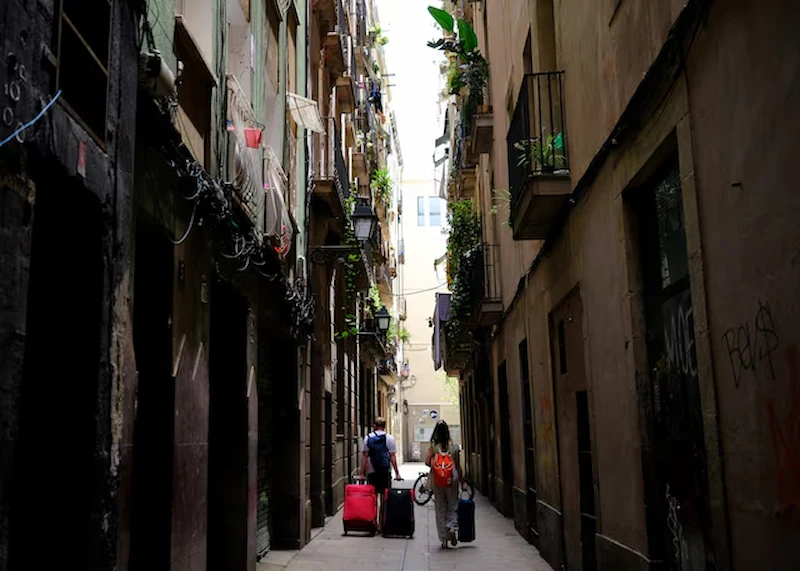


In response to growing discontent among locals feeling the pinch of soaring rental prices, the Spanish government announced a crackdown on short-term and seasonal holiday lettings. Consumer rights minister Pablo Bustinduy revealed plans to investigate listings on popular platforms like Airbnb and Booking.com to ensure they comply with licensing regulations. Bustinduy emphasized that advertising unlicensed properties for tourism should be deemed illegal and subject to punishment.
Struggling to strike a balance between boosting tourism, a crucial economic driver, and addressing citizens' grievances regarding unaffordable rents fueled by gentrification and the shift to lucrative tourist rentals, Spain is witnessing a rental price surge. Statistics from property website Idealista show rental prices increasing by 13% on average in June compared to the previous year, with tourist cities like Barcelona and Madrid experiencing an 18% spike.
Barcelona's mayor, Jaume Collboni, declared plans to phase out all short-term lets in the city by 2028, a move contested by Apartur, the association representing tourism apartment owners. Simultaneously, residents in tourist hotspots such as Barcelona, the Canary Islands, and Malaga have taken to the streets in protest against the proliferation of tourist rentals, impacting seasonal hospitality workers' ability to secure accommodation.
Recognizing the need for regulation, Prime Minister Pedro Sanchez announced the establishment of a holiday rental property registry to control the number of listings. Housing minister Isabel Rodriguez indicated that the registry would be operational by the end of 2025 at the earliest, requiring online platforms to provide host data for verification purposes. The government is also considering measures to restrict mid-term rentals and potentially granting neighbors in apartment complexes a say in determining whether an owner can list their property.
While some union representatives, like Victor Palomo from the Madrid Tenants' Union, expressed skepticism about the effectiveness of involving neighbors in regulation, they underscored the urgent need for landlords to contribute more taxes. Airbnb and Booking.com have yet to comment on the government's actions.