


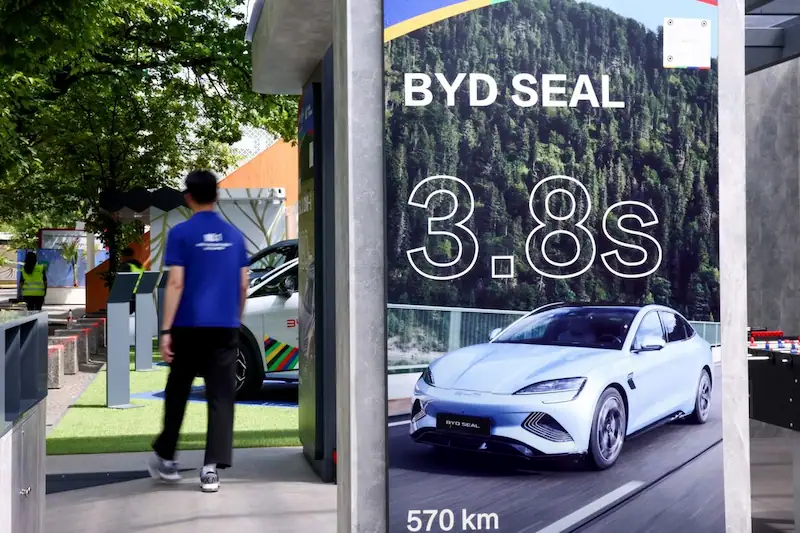


The implementation of European Union tariffs in July resulted in a significant slowdown in the influx of Chinese-made electric vehicles into the EU, as the bloc took measures to protect its domestic automakers from stiff competition. Data from 16 member countries revealed a 45% decline in new EV registrations from Chinese automakers like BYD Co. and SAIC Motor Corp.’s MG compared to June.
Analysts attributed this decline to a rush by car manufacturers to clear out stock before the tariffs went into effect on July 5. The provisional tariffs imposed raised import duties by up to 48%, aiming to safeguard the EU industry against Chinese competitors who benefit from state subsidies and have advantages in areas such as battery technology.
Despite the drop in July registrations, Chinese brands like BYD and MG remain determined to expand their presence in Europe. These companies have steadily increased their market share in the EU’s electric car market, accounting for 8.5% in July compared to 7.4% a year earlier. This growth is further emphasized by the threefold increase in EV sales by BYD in the 16 markets compared to the previous year.
While some Chinese brands experienced a decline in July sales compared to the same period last year, BYD's continued growth has helped offset this trend. BYD's resilience is evident in its strategies to absorb the tariffs and expand further into Europe, highlighted by its recent entry into Poland and plans for a new plant in Hungary.
The ongoing tariff debate between the EU and China coincides with a global slowdown in EV sales, putting pressure on manufacturers worldwide. EU policymakers are striving to balance protecting jobs in the automotive industry with the goal of phasing out new fossil fuel cars by 2035. Meanwhile, European manufacturers are forming partnerships with Chinese counterparts to cut costs and remain competitive in the EV market.
As Chinese automakers intensify their efforts to assemble EVs in Europe, the impact of the tariffs on their expansion remains to be seen. With BYD's unwavering commitment and resilience in the face of challenges, the Chinese brand is poised to make a significant mark on the European electric vehicle market.