


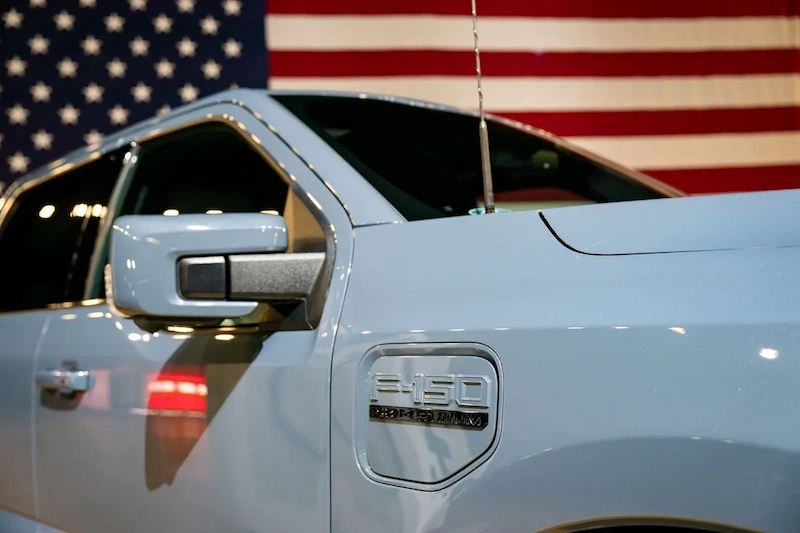


In a significant shift for Ford Motor Co., the company recently announced plans to temporarily close down its Michigan factory responsible for producing the F-150 Lightning, the iconic electric pickup truck that was intended to exemplify Ford's electric vehicle strategy. This decision marks another setback for the model, which had been positioned as a key player in the company's EV lineup. Despite initial optimism and high expectations, demand for the Lightning has dwindled, reflecting broader challenges in the electric vehicle market.
The closure of the Dearborn plant, where President Joe Biden had previously test-driven the Lightning, is set to last seven weeks starting in mid-November. Ford cited the need to balance production with sales growth and profitability as the driving force behind the shutdown. Throughout the year, Ford has struggled to match sales projections for the Lightning, prompting earlier cuts in production and workforce shifts. Initially, the company had faced setbacks with quality issues and subsequently slashed prices in an effort to stimulate sales.
During the recent third-quarter earnings call, Ford CEO Jim Farley acknowledged the sluggish adoption of EVs among mainstream consumers. The company is now forecasting a $5 billion loss for the year on its electric vehicle segment, primarily due to warranty costs associated with quality problems. In response to these challenges, Ford is refocusing its efforts on developing a new range of affordable electric vehicles priced below $30,000, while also shelving plans for a three-row electric SUV.
Looking ahead, Ford is aiming to revamp its electric vehicle lineup with the introduction of a small electric pickup truck in 2027, engineered by a specialized team in California spearheaded by a former Tesla executive. Farley emphasized the importance of transitioning to next-generation electric vehicles to enhance competitiveness in the global market.
The production halt for the F-150 Lightning is scheduled to conclude on Jan. 6, signaling a temporary pause in Ford's electric vehicle ambitions as it navigates the evolving landscape of the EV market. Amidst these challenges, Ford remains committed to refining its electric vehicle offerings, preparing to launch new models that are poised to enhance its standing as a key player in the industry in the coming years.