


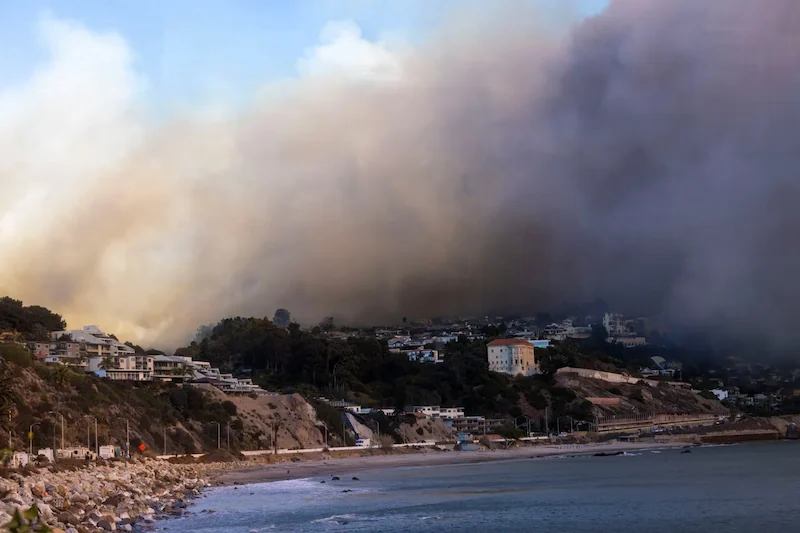


In the midst of the catastrophic Los Angeles wildfires, researchers aboard the research vessel Reuben Lasker found themselves in a unique position to gather real-time data on how the infernos were affecting the ocean ecosystems off the Southern California coast. As ash from the fires began to rain down on the ship, the scientists seized the opportunity to investigate the repercussions of urban wildfires on marine life and commercial fisheries, an area of study that has received little attention in the past.
Oceanographer Rasmus Swalethorp described the experience as akin to standing in a snowfall of synthetic ash, rather than traditional snowflakes, with a peculiar scent of burnt electronics permeating the air. The wildfires, which incinerated not just woodlands but also numerous structures containing plastics, pesticides, asbestos, herbicides, and lithium-ion batteries, released toxic compounds into the atmosphere that spread far over the sea.
Julie Dinasquet, leading a research team from Scripps and NOAA, expressed concern about these toxins entering the food web and potentially accumulating in the fish that humans consume. The team onboard the Reuben Lasker, which had just begun its regular expedition along the California coast, found unprecedented quantities of ash and debris in the water as they sailed closer to the burning shore.
Taking advantage of this unexpected opportunity, the scientists deployed nets to collect plankton samples, only to find them tainted with ash and debris, indicative of the widespread contamination brought about by the wildfires. The worry intensified as the researchers realized that California anchovies, a vital food source for a range of marine species, were spawning amidst the chaos.
As the research vessel made its way back to shore, plans were set in motion to continue studying the impacts of the wildfires. Dante Capone, a PhD student focusing on the ecological effects of wildfires, began sampling water near the coast, anticipating the heightened risk of toxic contaminants washing into the ocean during the upcoming winter rains. With another CalCOFI cruise scheduled for March, the researchers are eager to further investigate the aftermath of the Los Angeles wildfires on the coastal environment.
In conclusion, the events unfolding off the coast of Southern California serve as a stark reminder of the interconnectedness between land and sea ecosystems. The impact of urban wildfires on marine life presents a new frontier for scientific exploration, one that could shed light on the far-reaching consequences of such disasters on our oceans.