


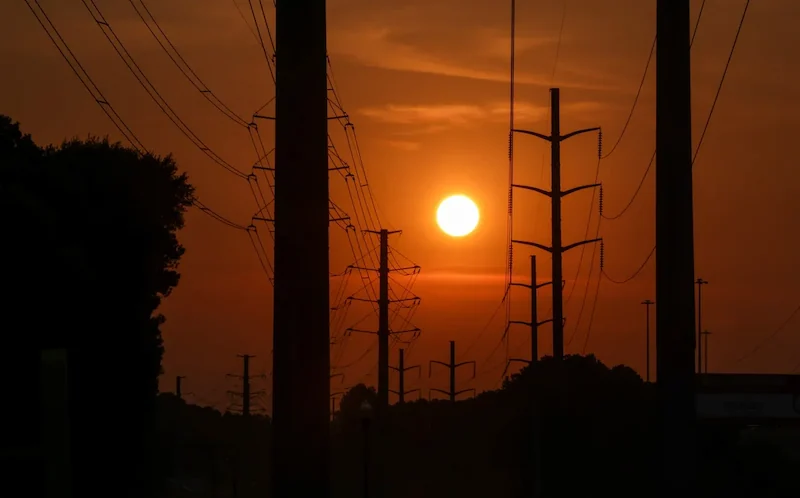


The kind of heat that presses into your skin before you even step outside is creeping east. There’s no escape this time, not in the mornings, not at night, not in the shade. A massive dome of high pressure is settling in across the central and eastern United States, and it’s doing so with a suffocating intensity that’s already starting to buckle more than just thermometers. Power prices are rising. Trains are slowing down. Air conditioners are running hard — and they’re not getting much of a break.
It started with a forecast — the kind meteorologists like Rich Otto from the Weather Prediction Center in Maryland have learned to eye warily. This wasn’t just another summer scorcher. Otto called the reach and staying power of this heat “a little bit uncommon.” That’s polite talk for “you’re going to want to stay inside, and if you can’t, you’re going to feel it — deeply.”
By Friday, places like New York and Washington were brushing up against 100 degrees Fahrenheit. But the heat’s just getting started. Early next week, it’s headed south — toward Atlanta, Memphis, and Nashville — dragging high humidity with it. When you add that to the raw temperature, it’s going to feel closer to 115°F in some places. And it’s not cooling off at night. That’s part of the problem.
This kind of weather doesn't just make people miserable. It stresses the very infrastructure that keeps daily life moving. The big regional grid operators — PJM Interconnection and MISO — have already started raising flags. PJM covers a massive stretch from Illinois to the D.C. corridor, and MISO stretches across the midcontinent. They’ve put out alerts to power plants and transmission operators: check your fuel, prep for strain, no room for surprise outages. In fact, MISO’s already been struggling with some unexpected generation outages in recent weeks. Now, they’re bracing for demand to hit 123 gigawatts — a heavy lift by any measure.
And when demand goes up like this, prices go with it. On Friday, peak-hour power costs in PJM jumped 39%, hitting $262.35 per megawatt-hour. In Virginia — home to a massive cluster of data centers that burn through electricity at staggering rates — peak prices more than doubled in just a day, surging past $440. The AI boom is part of that story. All those new servers and systems, humming away to train algorithms and crunch data, are helping drive the biggest surge in electricity demand seen in decades.
But it's not just the wires that are feeling the heat. Steel rails are expanding in the sun, and Amtrak has issued warnings about possible slowdowns and delays. It’s not paranoia — it’s physics. Heat makes everything swell, and for trains, that can mean buckled tracks, sluggish schedules, and stranded passengers.
The National Weather Service isn’t mincing words either. Advisories, watches, and outright heat warnings have been slapped across much of the eastern seaboard and deep into the South. They’re telling people to stay inside if they can. Hydrate. Avoid strenuous activity. Pretty standard advice — but this time, it might not be enough. Especially in places where older homes lack central air or where energy bills are already stretching household budgets thin.
The good news — such as it is — is that relief is on the horizon, but not immediately. Otto says the so-called “heat dome” that’s trapping this furnace-like air should start moving west late next week. That’s assuming nothing shifts in the meantime.
Until then, the east will be cooking. And the systems we rely on will be tested, over and over, as people across cities and small towns try to do one thing: stay cool.