


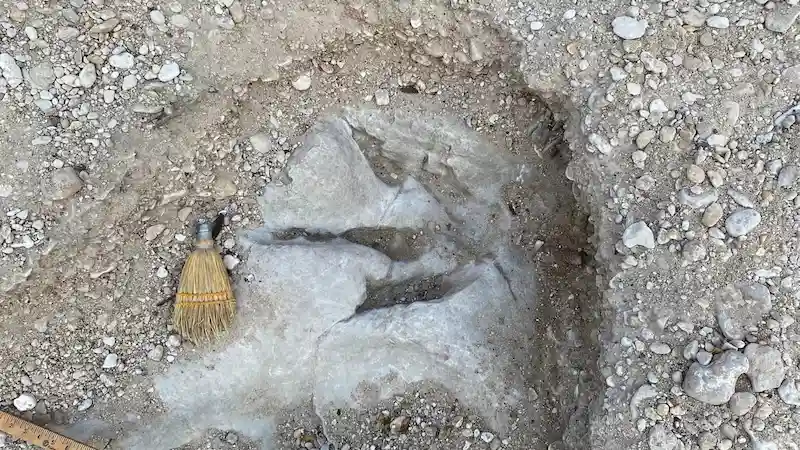


In the scorching summer heat and amidst a growing drought, a group of volunteers in Texas stumbled upon a fascinating discovery: giant dinosaur tracks believed to be from around 110 million years ago. According to Paul Baker, the retail manager at Dinosaur Valley State Park, this is an unprecedented find as he had never seen such a large number of dinosaur tracks before. The park, located approximately an hour and a half south of Dallas, is already known for its abundance of dinosaur tracks left by sauropods and theropods that inhabited the area millions of years ago. However, the receding water levels this summer exposed even more pieces of ancient history.
The extreme drought that has been plaguing parts of Texas since June allowed for the unveiling of these new dinosaur tracks. The US Drought Monitor reported that over a third of the state is currently experiencing severe drought conditions. As water levels in the Paluxy River, which runs through the park, decreased due to the drought, previously hidden dinosaur tracks were revealed. This has been a bittersweet moment for Glen Kuban, a paleontologist who has been studying the Paluxy dinosaur tracks in and around Dinosaur Valley State Park for over four decades. The drought has offered an opportunity to discover significant pieces of paleontological history, but it also highlights the harsh effects of extreme weather conditions on the environment.
The newly discovered tracks are believed to belong to two distinct species: an Acrocanthosaurus, which could weigh up to 7 tons, and a Sauropodseiden, commonly referred to as Paluxysaurus, with a weight of around 44 tons. However, it is important to note that the drought does not naturally expose perfectly preserved tracks. Typically, tracks are covered by layers of gravel, sand, and dried mud, which require significant effort from volunteers to uncover. Glen Kuban, along with a group of dedicated volunteers, has been involved in the careful excavation, cleaning, and mapping of these tracks. Last year, they successfully cleaned and mapped the longest dinosaur tail in North America, along with several nearby tracks.
For Paul Baker, who grew up in Dinosaur Valley State Park, uncovering dinosaur tracks is an incredibly special experience that allows him to give back to the place and community he loves. As the park's retail manager and son of a former park manager, he provides essential support to the volunteers by supplying them with equipment and logistical assistance. While the drought offered them a glimpse into the past and a chance to document history, Baker emphasizes the importance of acknowledging the ongoing drought and record-high temperatures. He fondly remembers swimming and fishing in the now-dry Paluxy River, lamenting the loss of its natural beauty. Ultimately, the discovery of the dinosaur tracks is a shining moment amidst the unfolding environmental challenges that Texas faces.