


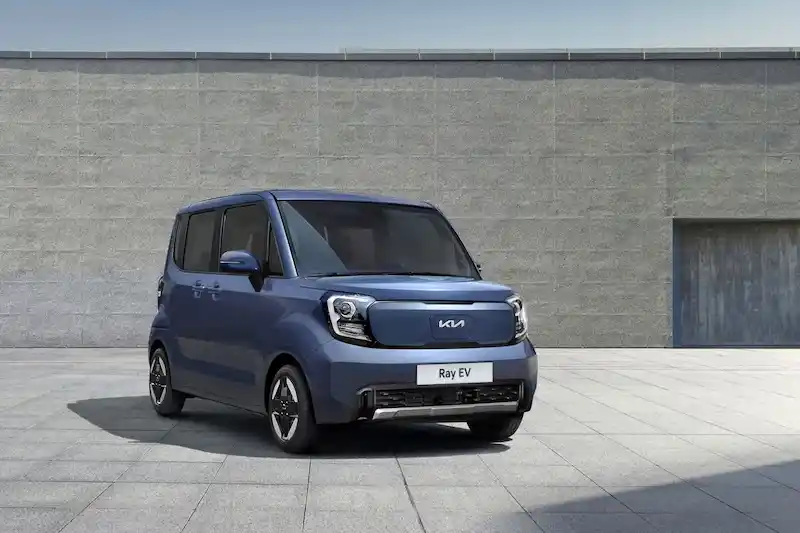


Kia Corp., a prominent automaker, has recently introduced its latest electric vehicle, the compact and economical Ray. This innovative car is designed to accommodate just one person in its smallest configuration and comes with a price tag to match in the South Korean market.
With a starting price of approximately $20,000, the Ray is Kia's most affordable battery-powered vehicle, catering to the growing demand for electric vehicles at a lower price point. However, it faces tough competition in South Korea's EV market, driven by the presence of startups and online buying options offering even cheaper alternatives.
Interestingly, the Ray has already garnered significant attention and popularity. Since Kia unveiled its arrival, over 6,000 customers pre-ordered the vehicle within a span of 20 business days, surpassing Kia's initial goal of 4,000 pre-orders for the entire year of 2023.
In Seoul, buyers can enjoy additional subsidies that further lower the cost to around $16,000. The single-seat version of the Ray is priced at about 27 million won ($20,500), and the four-seat variant is slightly higher, reaching up to 29.55 million won.
The Ray is specifically designed for urban dwellers who have access to established charging infrastructure. With a driving range of approximately 200 kilometers on a single charge, it offers practicality for city commuting. Moreover, the vehicle can be quickly charged using a fast charger, taking just 40 minutes to go from 10% to 80% battery capacity.
In terms of battery technology, the Ray is equipped with a 35.2 kilowatt-hour lithium-iron-phosphate (LFP) battery. This choice of battery is known for being cost-effective compared to nickel-based cells, although it provides a slightly shorter driving range. However, Kia has not disclosed the specific battery supplier.
This move by Kia signifies its foray into the competitive landscape of affordable electric cars, driven by rising inflation and higher interest rates, affecting consumer sentiment. The influx of local startups, as well as the option to buy Chinese EVs online and pay taxes, has also posed a threat to established players like Hyundai Motor Co. and Kia, who currently dominate the Korean market with an 80% market share.